RPA Software Implementation: Achieve 3-Month ROI in US Operations by 2026

Anúncios
RPA Software Implementation: Achieve a 3-Month ROI Blueprint for US Operations by 2026
In today’s fast-evolving business landscape, organizations are under immense pressure to enhance efficiency, reduce operational costs, and accelerate digital transformation. For businesses operating within the United States, the competitive edge often hinges on adopting innovative technologies that deliver tangible and rapid returns. Among these, Robotic Process Automation (RPA) software stands out as a powerful catalyst for change. This comprehensive guide, ‘RPA Software Implementation: Achieve a 3-Month ROI Blueprint for US Operations by 2026,’ delves into the strategic deployment of RPA, outlining a practical three-month roadmap designed to ensure a significant return on investment (ROI) for US-based companies by 2026. Understanding the nuances of RPA software implementation is critical, and this article provides the insights needed to navigate this journey successfully, focusing on immediate impact and long-term value.
Anúncios
The Imperative of RPA Software in US Business Operations
The US market is characterized by high labor costs, stringent regulatory requirements, and a constant demand for speed and accuracy. These factors create an ideal environment for the adoption of RPA software. RPA bots are capable of automating repetitive, rule-based tasks, freeing human employees to focus on more strategic, creative, and customer-centric activities. This shift not only boosts productivity but also improves employee morale and reduces the likelihood of human error. The strategic implementation of RPA software is no longer a luxury but a necessity for businesses aiming to remain competitive and agile.
Many US companies are already leveraging RPA to streamline operations in various departments, from finance and accounting to human resources, customer service, and IT. The benefits extend beyond mere cost savings; they encompass improved data quality, faster processing times, enhanced compliance, and a more scalable operational model. By 2026, the expectation is that RPA will be an even more ingrained part of the operational fabric across industries in the US, making early and effective implementation crucial for securing a competitive advantage. Our focus here is on achieving a rapid RPA Software ROI, specifically within a three-month window, a timeframe that underscores the technology’s potential for quick wins.
Defining RPA Software and Its Core Capabilities
At its core, RPA software utilizes ‘bots’ or ‘software robots’ to mimic human interactions with digital systems. These bots can open applications, log in, copy and paste data, move files, and even interact with APIs and web services, all without manual intervention. Unlike traditional IT automation, RPA does not require complex system integrations or changes to existing infrastructure. It operates at the user interface level, making it non-invasive and relatively quick to deploy. This characteristic is a significant advantage when aiming for a swift RPA Software ROI.
Anúncios
Key capabilities of RPA software include:
- Task Automation: Automating repetitive, high-volume tasks such as data entry, report generation, and invoice processing.
- Integration without APIs: Interacting with existing applications through their user interfaces, just like a human user would.
- Error Reduction: Eliminating human error in data handling and process execution, leading to higher accuracy.
- 24/7 Operation: Bots can work around the clock without breaks, significantly increasing processing capacity.
- Scalability: Easily scaling up or down the number of bots to meet fluctuating business demands.
- Auditability: Providing detailed logs of all actions performed by bots, ensuring compliance and transparency.
These capabilities collectively contribute to a compelling business case for RPA, particularly when a rapid RPA Software ROI is a primary objective.
Month 1: Foundation and Pilot Project Selection for RPA Software ROI
The first month of your RPA journey is critical for laying a strong foundation and identifying the right opportunities for automation. A well-executed Month 1 sets the stage for achieving a 3-month RPA Software ROI. This phase involves meticulous planning, stakeholder engagement, and a deep dive into existing processes.
Phase 1: Strategic Alignment and Stakeholder Buy-in
Before any technical work begins, it’s essential to align your RPA initiatives with your overall business strategy. Engage senior leadership from various departments (IT, Finance, Operations, HR) to secure their buy-in and communicate the potential benefits of RPA. This initial alignment ensures that the project receives the necessary resources and support. Clearly articulate the vision for RPA, emphasizing how it will contribute to key business objectives, such as cost reduction, improved customer experience, or enhanced regulatory compliance. Highlight the potential for a quick RPA Software ROI to garner enthusiasm.
Form a dedicated RPA Center of Excellence (CoE) or a core project team. This team should include business analysts, process owners, IT specialists, and potentially an RPA developer. The CoE will be responsible for guiding the entire implementation process, from strategy to execution and ongoing management. Their collective expertise will be invaluable in identifying the most impactful automation opportunities.
Phase 2: Process Identification and Assessment
This is arguably the most crucial step in Month 1. You need to identify processes that are ideal candidates for automation. Not all processes are suitable for RPA, and selecting the wrong ones can derail your efforts and delay your RPA Software ROI. Look for processes that are:
- Repetitive: Performed frequently and consistently.
- Rule-based: Follow clear, predictable steps with minimal human judgment.
- High-volume: Involve a large number of transactions or data points.
- Prone to error: Where human error frequently occurs, leading to rework or compliance issues.
- Time-consuming: Processes that consume significant human effort and time.
- Stable: Processes that are unlikely to change significantly in the near future.
Conduct workshops with process owners to map out current-state processes in detail. Document each step, including inputs, outputs, decision points, and system interactions. Tools like process mining can be highly beneficial here, providing data-driven insights into process bottlenecks and automation potential. Prioritize processes based on their potential for RPA Software ROI, ease of implementation, and strategic impact. Aim for a ‘low-hanging fruit’ process for your initial pilot – something simple enough to implement quickly but impactful enough to demonstrate value.
Phase 3: Vendor Selection and Initial Setup
Based on your identified needs and budget, select an RPA software vendor. The market offers several robust platforms (e.g., UiPath, Automation Anywhere, Blue Prism), each with its strengths. Consider factors such as scalability, ease of use, integration capabilities, security features, and vendor support. For US operations, ensure the chosen vendor complies with relevant data privacy and security regulations. During this phase, also begin the initial setup of the RPA environment, which includes installing the software, configuring licenses, and setting up development and testing environments. This foundational work is essential for a smooth transition into Month 2 and for realizing a rapid RPA Software ROI.
Month 2: Development and Testing of the Pilot RPA Solution
With a solid foundation from Month 1, Month 2 focuses on the actual development and rigorous testing of your chosen pilot RPA solution. This is where the theoretical planning transforms into practical application, driving towards your 3-month RPA Software ROI.
Phase 4: Solution Design and Development
The RPA CoE, along with dedicated RPA developers, will now design the automated solution for the selected pilot process. This involves creating detailed process definitions, flowcharts, and technical specifications. The development phase includes configuring the bots to mimic human actions, integrating with necessary applications, and building in error handling mechanisms. It’s crucial to follow best practices for RPA development, such as modular design, reusability of components, and clear documentation. Regular communication between developers and business process owners is vital to ensure the solution accurately reflects the desired automation.
Consider the scalability of the solution even at this early stage. While you are focusing on a pilot, designing with future expansion in mind will save time and resources down the line. The goal is to build a robust and efficient bot that delivers on the promise of improved operational efficiency and contributes directly to the RPA Software ROI.
Phase 5: Comprehensive Testing and Refinement
Once the bot is developed, extensive testing is paramount. This phase ensures the bot performs as expected, handles exceptions gracefully, and delivers accurate results. Testing should cover:
- Unit Testing: Individual components of the bot.
- System Integration Testing: How the bot interacts with different applications and systems.
- User Acceptance Testing (UAT): Business users validating the bot’s output and functionality against real-world scenarios.
- Performance Testing: Assessing the bot’s speed and efficiency under various loads.
- Exception Handling Testing: Ensuring the bot can gracefully manage unexpected errors or variations in data.
Document all test cases and results. Any identified issues should be addressed promptly, and the bot refined until it meets all functional and non-functional requirements. This iterative process of testing and refinement is critical for building confidence in the RPA solution and ensuring it contributes positively to your RPA Software ROI.
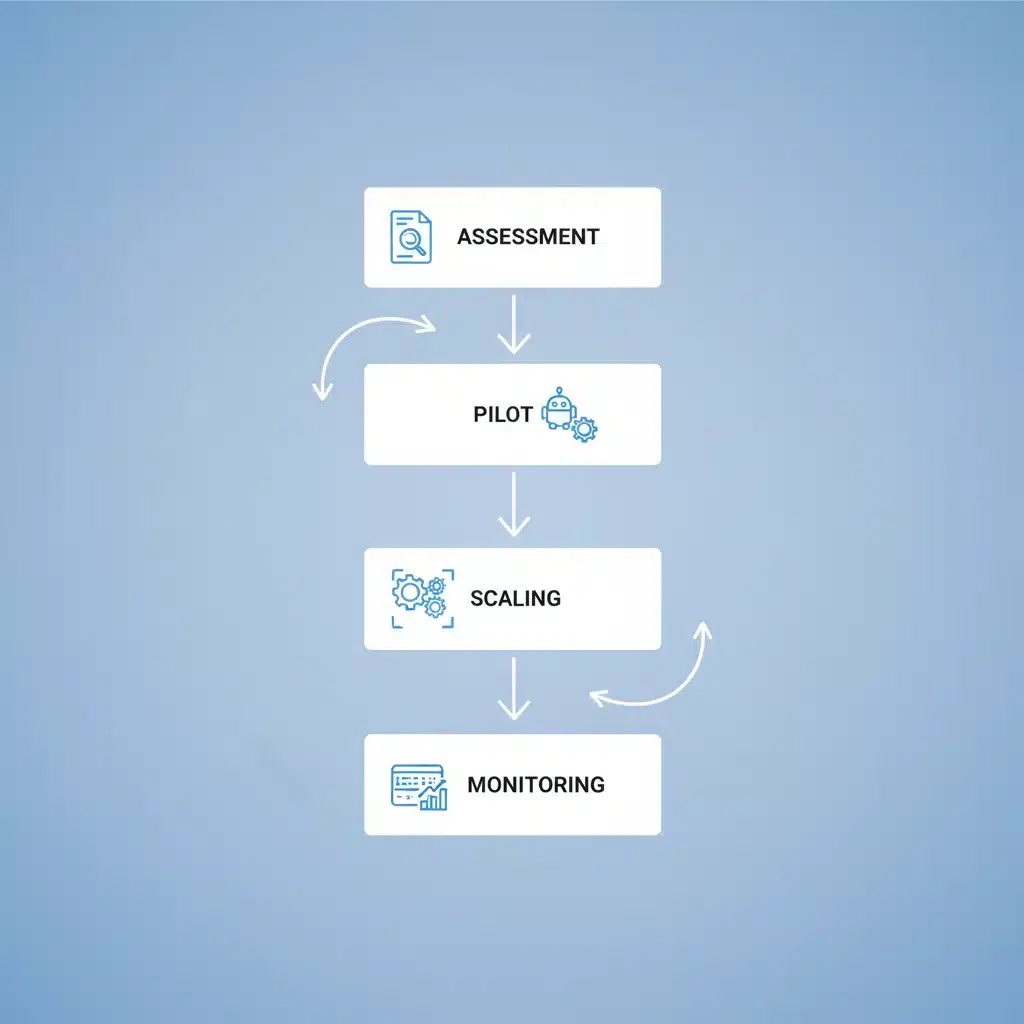
Month 3: Deployment, Monitoring, and Measuring RPA Software ROI
The final month of our blueprint focuses on deploying the pilot RPA solution, establishing monitoring mechanisms, and, most importantly, measuring the RPA Software ROI. This is the culmination of your efforts and the point where you start realizing the benefits.
Phase 6: Pilot Deployment and Go-Live
After successful testing and stakeholder approval, the RPA solution is ready for deployment into a production environment. Start with a controlled pilot, running the bot on a limited set of transactions or a specific segment of the process. This allows for real-world validation without risking widespread disruption. Monitor the bot’s performance closely during this initial period, looking for any unforeseen issues or areas for further optimization.
Ensure that appropriate support structures are in place. This includes defining roles and responsibilities for bot maintenance, issue resolution, and performance monitoring. Train relevant business users and IT staff on how to interact with the automated process and what to do if an exception occurs. A smooth go-live is essential for building trust in the RPA technology and demonstrating its immediate value towards your RPA Software ROI.
Phase 7: Performance Monitoring and RPA Software ROI Measurement
Once the pilot is live, continuous monitoring is crucial. Implement dashboards and reporting tools to track key performance indicators (KPIs) related to the automated process. These KPIs might include:
- Processing Time: How much faster is the bot compared to manual execution?
- Accuracy Rate: Reduction in errors.
- Volume Processed: Number of transactions handled by the bot.
- Cost Savings: Reduction in labor costs, rework, and operational expenses.
- Employee Productivity: Time saved for human employees, allowing them to focus on higher-value tasks.
- Compliance Adherence: Improved consistency in following regulations.
The core objective of this phase is to quantify the RPA Software ROI. Calculate the direct and indirect cost savings achieved through automation. Compare these savings against the initial investment in software licenses, development, and infrastructure. Within three months, you should be able to demonstrate a clear positive ROI or a strong trajectory towards it, especially with a well-chosen pilot project. This data will be vital for justifying further RPA investments and scaling the program across your US operations.
Beyond financial metrics, also capture qualitative benefits, such as improved employee satisfaction, better customer service, and enhanced data quality. These non-financial benefits often underpin the long-term success of RPA initiatives.
Scaling RPA for Sustained Value Beyond 3 Months
Achieving a 3-month RPA Software ROI with your pilot project is a significant milestone, but it’s just the beginning. To realize the full potential of RPA, US businesses must have a strategy for scaling automation across the enterprise. This involves expanding the CoE, identifying more complex processes, and integrating RPA with other emerging technologies.
Expanding the RPA Center of Excellence (CoE)
As your RPA program matures, the CoE will need to expand its capabilities. This might involve bringing in more developers, solution architects, and process analysts. The CoE will evolve from a project-focused team to a strategic hub for automation, responsible for governance, best practices, training, and innovation. A strong CoE ensures that RPA initiatives are aligned with business goals and continue to deliver substantial RPA Software ROI.
Identifying and Automating More Complex Processes
Once you have successfully automated simpler, rule-based tasks, you can start tackling more complex processes. This often involves integrating RPA with advanced technologies like Artificial Intelligence (AI), Machine Learning (ML), and Natural Language Processing (NLP). This combination, often referred to as ‘Intelligent Automation,’ allows bots to handle unstructured data, make decisions based on predictive analytics, and interact more naturally with users. Examples include automating customer service inquiries using chatbots powered by NLP or processing invoices with varying formats using AI-driven document understanding. These advanced applications can unlock even greater RPA Software ROI.
Establishing a Robust Governance Framework
As RPA scales, a robust governance framework becomes indispensable. This framework should define policies, procedures, and standards for bot development, deployment, security, and maintenance. It should also address compliance requirements, data privacy, and risk management. Effective governance ensures that RPA initiatives are implemented consistently, securely, and in alignment with organizational objectives, safeguarding the sustained RPA Software ROI.
Challenges and Mitigation Strategies in RPA Implementation
While the path to a 3-month RPA Software ROI is achievable, it’s not without its challenges. Proactive identification and mitigation of these hurdles are crucial for success.
Resistance to Change
Employees may fear job displacement or perceive RPA as a threat. Mitigation involves clear communication about the benefits of RPA – focusing on how it frees employees from mundane tasks, allowing them to engage in more fulfilling work. Involve employees in the process identification and design phases to foster a sense of ownership and collaboration. Highlight success stories and the positive impact on employee satisfaction and productivity. Proper change management is key to overcoming this resistance and ensuring a smooth transition towards an automated future.
Process Instability
Automating a broken or frequently changing process will only automate inefficiency. Mitigation requires thorough process assessment and standardization before automation. This might involve business process re-engineering (BPR) to optimize the process first. Only then should RPA be applied. This ensures that the automated process is robust and delivers the expected RPA Software ROI.
Lack of Skilled Resources
A shortage of skilled RPA developers and analysts can hinder implementation. Mitigation strategies include investing in training existing IT staff, partnering with RPA service providers, or leveraging citizen development programs where business users are trained to build simple bots. Building internal capabilities is crucial for long-term sustainability and maximizing RPA Software ROI.
Security Concerns
Deploying bots that interact with sensitive data raises security concerns. Mitigation involves implementing robust security protocols, including access controls, encryption, and regular security audits. Ensure that your RPA platform complies with industry-specific regulations (e.g., HIPAA for healthcare, PCI DSS for finance) relevant to your US operations. A secure RPA environment is non-negotiable for maintaining trust and protecting your investment.

The Future of RPA Software in US Operations by 2026
Looking ahead to 2026, RPA software is set to evolve further, becoming an even more integral component of digital transformation strategies in the US. The trend towards intelligent automation, combining RPA with AI and ML, will accelerate, enabling businesses to automate increasingly complex and cognitive tasks. The focus will shift from simply automating individual tasks to orchestrating end-to-end business processes, creating hyper-automated enterprises.
The emphasis on cloud-based RPA solutions will also grow, offering greater flexibility, scalability, and reduced infrastructure costs. This will make RPA more accessible to small and medium-sized businesses, democratizing automation across the US market. The ‘citizen developer’ movement, empowering business users to create their own bots, will gain momentum, further accelerating the adoption rate and the realization of RPA Software ROI across various departments.
Furthermore, ethical AI and responsible automation will become paramount. US businesses will need to ensure that their RPA deployments are fair, transparent, and do not introduce biases. Compliance with emerging regulations around AI and automation will be a key consideration, impacting how RPA solutions are designed and governed. Organizations that embrace these future trends will be best positioned to maximize their RPA Software ROI and maintain a leading edge in the competitive US landscape.
Conclusion: Your Path to a 3-Month RPA Software ROI
Implementing Robotic Process Automation software presents a transformative opportunity for US businesses to achieve unprecedented levels of efficiency, accuracy, and scalability. By following this meticulously crafted three-month blueprint, organizations can strategically identify, develop, deploy, and measure the impact of RPA, ensuring a rapid and significant return on investment by 2026.
The journey begins with foundational planning and astute process selection in Month 1, transitions into focused development and rigorous testing in Month 2, and culminates in successful deployment, vigilant monitoring, and quantifiable RPA Software ROI measurement in Month 3. Beyond the initial three months, a commitment to scaling, robust governance, and continuous innovation will solidify RPA as a cornerstone of your operational strategy.
Embrace the power of RPA software not just as a tool for cost reduction, but as a strategic enabler for digital transformation, empowering your workforce, and positioning your US operations for sustained success in an increasingly automated world. The time to act is now; your 3-month RPA Software ROI awaits.