AI Workforce Reskilling: US Companies Adapt for 2026 & Beyond
Anúncios
The Future of AI Workforce Reskilling: How US Companies are Adapting for 2026 and Beyond, with 5 Key Strategies
The relentless march of artificial intelligence (AI) is not just a technological revolution; it’s a profound reshaping of the global economy and, more specifically, the American workforce. As we hurtle towards 2026 and beyond, the imperative for US companies to engage in comprehensive AI workforce reskilling has never been more urgent. This isn’t merely about upskilling a few tech specialists; it’s about fundamentally transforming the capabilities of an entire labor pool to thrive in an AI-driven landscape. The World Economic Forum predicts that AI will create 97 million new jobs globally while displacing 85 million, underscoring the critical need for proactive adaptation. For US companies, this means understanding the nuances of AI’s impact and strategically investing in their human capital.
Anúncios
The current landscape presents a dichotomy: on one hand, the promise of unprecedented efficiency, innovation, and new market opportunities; on the other, the challenge of job displacement, skill gaps, and the potential for increased inequality if not managed effectively. American businesses are at a crossroads, where the decisions made today regarding AI workforce reskilling will dictate their competitive advantage and societal contribution in the coming decade. This article delves into the core challenges and opportunities, outlining five pivotal strategies US companies are adopting to navigate this transformative era, ensuring their workforce remains agile, relevant, and productive in an increasingly intelligent world.
Understanding the full scope of AI’s impact requires looking beyond automation. AI isn’t just taking over repetitive tasks; it’s augmenting human capabilities, creating hybrid roles, and demanding new forms of critical thinking, creativity, and emotional intelligence. This shift necessitates a paradigm change in how companies approach talent development. The traditional model of static job descriptions and one-off training sessions is no longer sufficient. Instead, a dynamic, continuous learning ecosystem must emerge, centered around the core principle of AI workforce reskilling.
Anúncios
The Growing Imperative for AI Workforce Reskilling in the US
The United States, as a global leader in technological innovation, is uniquely positioned to both benefit from and be challenged by the rapid advancement of AI. According to a recent PwC report, AI could contribute up to $15.7 trillion to the global economy by 2030, with a significant portion impacting the US. However, realizing this potential hinges on the preparedness of its workforce. The current skill sets possessed by many employees were designed for a pre-AI era, making the gap between existing capabilities and future demands increasingly wide. This is precisely why AI workforce reskilling has become a boardroom priority.
Consider the manufacturing sector, where robotics and AI are transforming assembly lines, demanding operators with skills in data analytics, predictive maintenance, and human-robot collaboration. Or the financial services industry, where AI algorithms are revolutionizing fraud detection, risk assessment, and personalized customer service, requiring employees to understand machine learning models and ethical AI deployment. Even traditionally ‘human-centric’ roles in healthcare, education, and customer service are being augmented by AI, necessitating new forms of digital literacy and critical thinking. The sheer breadth of this transformation means that AI workforce reskilling cannot be a niche initiative; it must be an organizational imperative.
Beyond specific industries, the foundational skills required across the board are shifting. Data literacy, algorithmic thinking, cybersecurity awareness, and the ability to work effectively alongside AI systems are becoming as crucial as traditional literacy and numeracy. Companies that fail to invest in these areas risk falling behind, facing talent shortages, reduced productivity, and ultimately, a loss of market share. The cost of not reskilling far outweighs the investment, making strategic AI workforce reskilling a matter of economic survival and growth for US enterprises.
The Economic and Social Stakes of Workforce Transformation
The economic implications of inadequate AI workforce reskilling are substantial. A McKinsey Global Institute report estimated that 14% of the global workforce, or 375 million workers, would need to switch occupations or acquire significant new skills by 2030 due to automation and AI. In the US, this translates to millions of individuals whose livelihoods could be impacted. Companies have a social responsibility, alongside an economic incentive, to facilitate this transition. Investing in employees’ future skills not only ensures business continuity but also contributes to a more equitable society, preventing widespread unemployment and social disruption.
Furthermore, an engaged and well-trained workforce is a powerful competitive differentiator. Companies known for investing in their employees’ development attract top talent and foster a culture of innovation. As AI continues to evolve, the ability to adapt quickly and effectively will be paramount. This adaptability is built upon a foundation of continuous learning and strategic AI workforce reskilling. The future of work is not just about technology; it’s about the human capacity to leverage that technology for collective prosperity.
Strategy 1: Cultivating a Culture of Continuous Learning
The first and perhaps most fundamental strategy for effective AI workforce reskilling is to embed a culture of continuous learning throughout the organization. This goes beyond offering occasional training courses; it means fostering an environment where learning is an ongoing, integrated part of every employee’s professional journey. In an AI-driven world, skills have a shorter shelf life, making lifelong learning an absolute necessity.
For US companies, this involves shifting mindsets from ‘training as an event’ to ‘learning as a process.’ Leaders must champion this cultural change, demonstrating their own commitment to learning and encouraging employees to explore new technologies and concepts. This includes allocating dedicated time for learning during work hours, providing access to diverse learning resources, and recognizing and rewarding skill acquisition. Companies like Amazon, with its Upskilling 2025 initiative, have committed hundreds of millions of dollars to provide free training to their employees in areas like AI and machine learning, demonstrating a clear commitment to continuous learning.
This strategy also entails designing learning pathways that are personalized and adaptive. Not all employees will need the same skills at the same time. Leveraging AI itself can help in this regard, using analytics to identify individual skill gaps and recommend tailored learning modules. By making learning accessible, relevant, and rewarding, companies can empower their workforce to take ownership of their AI workforce reskilling journey, ensuring they are always prepared for the next wave of technological change.
Strategy 2: Strategic Partnerships with Educational Institutions and Tech Providers
No single company can bear the full burden of AI workforce reskilling alone. The complexity and rapid evolution of AI necessitate strategic collaborations. US companies are increasingly forming partnerships with universities, community colleges, and specialized tech training providers to develop and deliver relevant curricula. These external partners often possess the specialized expertise, infrastructure, and pedagogical approaches required to train employees in cutting-edge AI technologies.
For instance, many tech giants like Google and IBM have created their own certification programs and partnered with educational platforms like Coursera and edX to make AI and data science courses widely available. Smaller and medium-sized enterprises (SMEs) can also benefit from these models, either by directly enrolling employees in such programs or by collaborating with local educational institutions to customize curricula that meet their specific industry needs. These partnerships can take various forms, from co-developing apprenticeship programs to sponsoring research and development initiatives that simultaneously train employees.
The benefits of such collaborations are multi-faceted. They allow companies to access high-quality, up-to-date training without having to build extensive internal training departments from scratch. They also help bridge the gap between academic knowledge and practical industry application, ensuring that the skills acquired are directly relevant to real-world business challenges. By leveraging external expertise, US companies can accelerate their AI workforce reskilling efforts and stay ahead of the curve.
Strategy 3: Implementing Robust Internal Training Programs and Skill Inventories
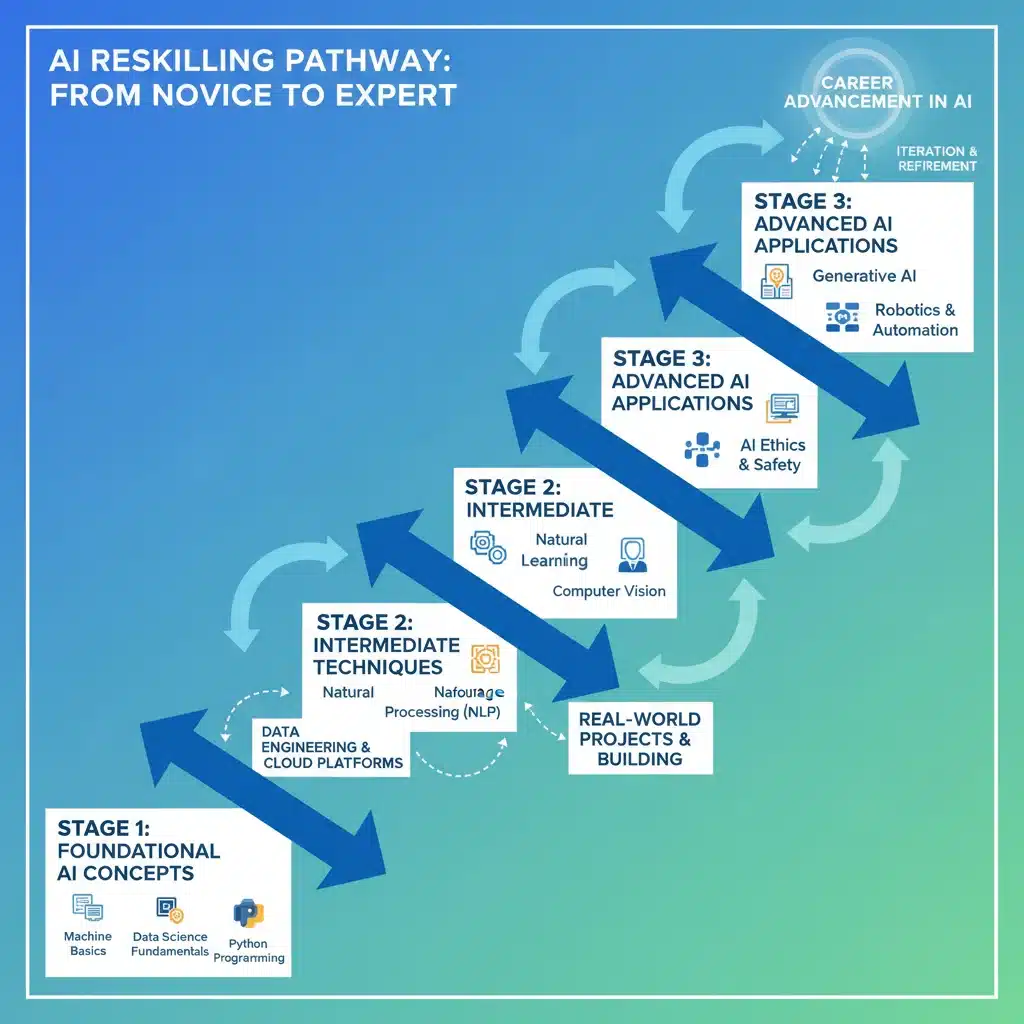
While external partnerships are crucial, internal initiatives remain the bedrock of sustainable AI workforce reskilling. This strategy focuses on building robust internal training programs and, critically, establishing comprehensive skill inventories. A skill inventory allows companies to understand their current capabilities, identify critical skill gaps, and track the progress of their reskilling efforts.
Internal training programs can range from online modules and workshops to mentorship programs and cross-functional project assignments. The key is to design programs that are practical, hands-on, and directly applicable to employees’ roles. This might involve creating ‘AI academies’ within the organization, where employees can dedicate time to intensive learning. Companies like AT&T have invested heavily in internal reskilling, transforming a significant portion of their workforce into software-centric roles through dedicated programs.
Furthermore, fostering internal expertise is vital. Identifying and developing ‘AI champions’ or ‘digital evangelists’ within the company can help disseminate knowledge and enthusiasm for new technologies. These individuals can serve as mentors, trainers, and advocates for AI workforce reskilling. Regularly updating skill inventories, perhaps using AI-powered platforms, helps ensure that training efforts are targeted and effective, aligning individual development with strategic business needs. This proactive approach ensures that the workforce is not just reacting to change but actively shaping its future.
Strategy 4: Redesigning Job Roles and Organizational Structures for Human-AI Collaboration
AI workforce reskilling isn’t just about changing individual skills; it’s also about fundamentally redesigning job roles and organizational structures to optimize human-AI collaboration. As AI takes over routine and analytical tasks, human workers will increasingly focus on areas where they have a comparative advantage: creativity, critical thinking, complex problem-solving, emotional intelligence, and interpersonal communication. This requires a thoughtful re-evaluation of how work is organized.
US companies are beginning to move away from traditional, siloed job descriptions towards more fluid, project-based roles that emphasize adaptability and collaboration. This might involve creating ‘hybrid’ roles where employees work directly alongside AI systems, interpreting their outputs, training them, and leveraging their insights to make better decisions. For example, a marketing analyst might become an ‘AI-augmented marketing strategist,’ using AI tools to analyze vast datasets and then applying human creativity to develop campaigns.
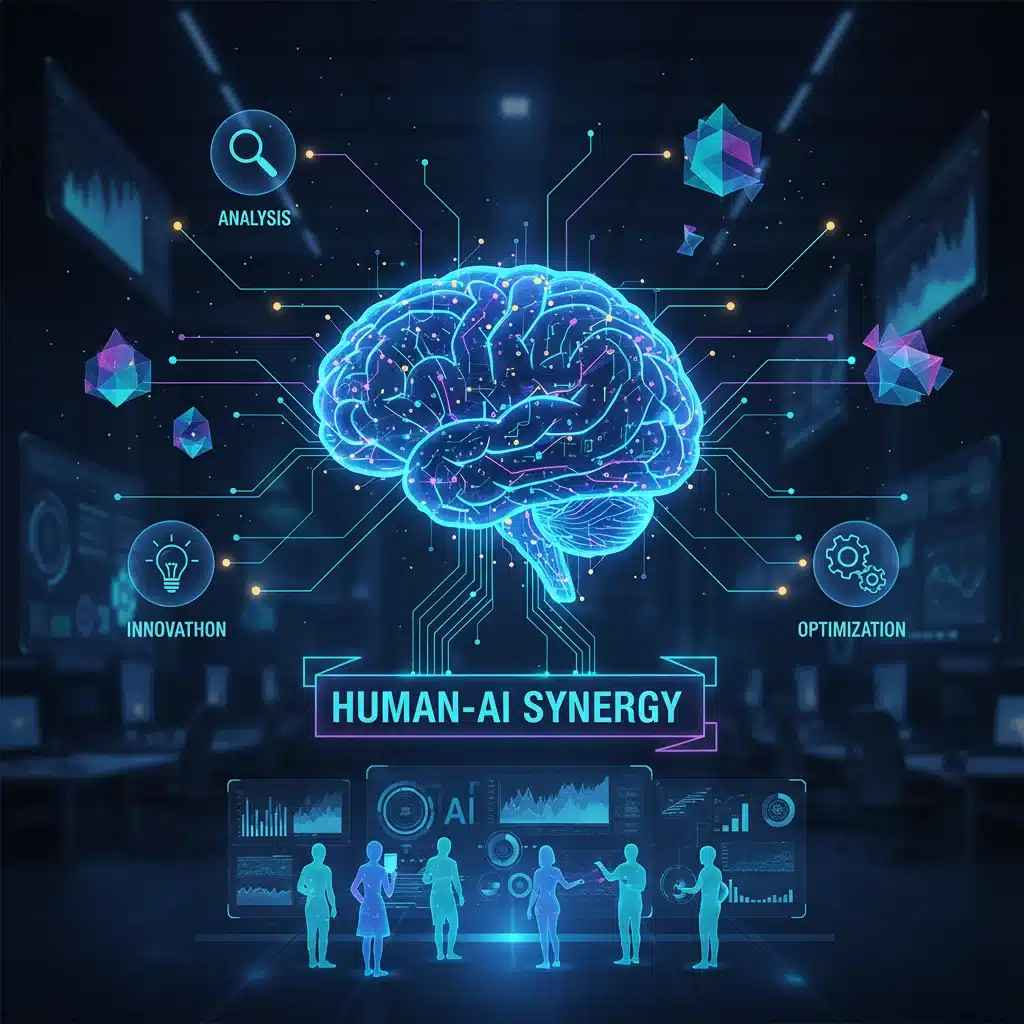
This strategy also involves fostering a culture where employees view AI not as a threat, but as a powerful tool that augments their capabilities. Training should focus not only on technical AI skills but also on ‘soft skills’ that enable effective human-AI teaming, such as communication, ethical reasoning, and critical evaluation of AI outputs. Organizational structures may need to become flatter and more agile, enabling quicker decision-making and cross-functional collaboration. By proactively redesigning roles and structures, companies can ensure that their AI workforce reskilling efforts lead to a synergistic human-AI ecosystem, unlocking new levels of productivity and innovation.
Strategy 5: Prioritizing Ethical AI and Responsible Implementation in Reskilling
As US companies delve deeper into AI workforce reskilling, a critical, often overlooked strategy is the prioritization of ethical AI and responsible implementation. Training employees in AI technologies without a strong foundation in ethical considerations can lead to unintended consequences, from biased algorithms to privacy breaches and societal mistrust. The ethical dimension of AI is not merely a compliance issue; it’s a foundational element of sustainable business practice and a crucial component of future-proof skills.
Reskilling programs must integrate modules on AI ethics, bias detection, data privacy, and responsible AI governance. Employees need to understand not just ‘how’ AI works, but ‘why’ certain ethical guidelines are crucial and ‘what’ the societal impact of their AI-driven work might be. This includes training on identifying and mitigating algorithmic bias, understanding data provenance, and adhering to evolving regulatory frameworks. Companies like Microsoft have made significant investments in responsible AI, developing internal guidelines and tools to ensure ethical development and deployment.
By embedding ethical considerations into their AI workforce reskilling initiatives, US companies achieve several critical objectives. First, they build trust with customers and stakeholders, demonstrating a commitment to responsible innovation. Second, they mitigate legal and reputational risks associated with unethical AI deployment. Third, and perhaps most importantly, they empower their workforce to be not just technically proficient but also ethically conscious AI practitioners, contributing to a future where AI serves humanity responsibly. This strategy ensures that as employees gain new AI skills, they also develop the moral compass to use those skills wisely.
Measuring Success and Adapting to Evolving AI Trends
The journey of AI workforce reskilling is not a one-time event but a continuous process of adaptation and refinement. For US companies, measuring the success of their reskilling initiatives is paramount. This involves establishing clear KPIs, such as completion rates of training programs, improvements in employee performance metrics, reduction in skill gaps, and ultimately, the impact on business outcomes like innovation, efficiency, and revenue growth.
Beyond internal metrics, companies must remain vigilant about evolving AI trends. The landscape of AI is dynamic, with new technologies, algorithms, and applications emerging constantly. This requires a commitment to continuous environmental scanning, participating in industry forums, and engaging with AI thought leaders. The strategies for AI workforce reskilling outlined above are not static; they must be regularly reviewed and updated to reflect the latest advancements in AI and the changing demands of the market.
For instance, the rise of generative AI and large language models presents new opportunities and challenges for the workforce. Reskilling efforts must now incorporate training on how to effectively use these tools for content creation, coding assistance, and strategic analysis, while also understanding their limitations and ethical implications. The ability to quickly integrate these new developments into existing AI workforce reskilling frameworks will be a key differentiator for leading US companies.
Conclusion: Charting a Resilient Future with AI Workforce Reskilling
The future of work in the United States is inextricably linked to the future of AI. For US companies to thrive in 2026 and beyond, proactive and strategic AI workforce reskilling is not an option but a strategic imperative. The five strategies discussed – cultivating a culture of continuous learning, forging strategic partnerships, implementing robust internal training, redesigning roles for human-AI collaboration, and prioritizing ethical AI – provide a comprehensive framework for navigating this transformation.
By investing in their human capital and empowering employees with the skills and mindset needed for an AI-driven world, US companies can unlock unprecedented opportunities for innovation, productivity, and sustainable growth. This journey requires visionary leadership, strategic investment, and a deep commitment to the well-being and development of every employee. As AI continues to redefine the boundaries of what’s possible, the companies that successfully embrace AI workforce reskilling will not only secure their own future but also contribute significantly to a resilient, prosperous, and equitable American economy.
The time for action is now. The future workforce is being shaped today, and those who lead the charge in comprehensive AI workforce reskilling will be the architects of tomorrow’s success.