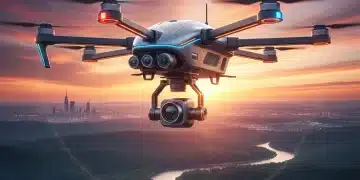
The 2026 Business Case for Drones in US Infrastructure Inspection: Reducing Costs by 20% Annually
The United States’ infrastructure, a vast and complex network of roads, bridges, pipelines, power grids, and public utilities, is the backbone of its economy and societal well-being. However, much of this critical infrastructure is aging, requiring constant monitoring, maintenance, and repair. Traditional inspection methods are often time-consuming, expensive, hazardous, and sometimes inefficient, leading to deferred maintenance and escalating costs. Enter the transformative potential of drone technology. By 2026, the integration of drones in US infrastructure inspection is poised to revolutionize how we manage these vital assets, promising not just enhanced safety and data quality, but also a significant financial return: an ambitious yet achievable 20% annual cost reduction. This article delves into the comprehensive business case for this technological shift, exploring the multifaceted benefits and strategic implementation required to realize these substantial savings.
Anúncios
The Current Landscape: Challenges in Infrastructure Inspection
Before we can fully appreciate the impact of drones in US infrastructure inspection, it’s crucial to understand the limitations of conventional approaches. Manual inspections often involve:
- High Labor Costs: Sending human inspectors to often remote, elevated, or hazardous locations requires extensive planning, specialized equipment, and significant personnel hours.
- Safety Risks: Workers face dangers from heights, confined spaces, live electrical components, and unstable structures. Accidents can lead to severe injuries, fatalities, and costly legal ramifications.
- Time Consumption: Large-scale infrastructure assets, such as miles of pipelines or extensive power lines, take weeks or even months to inspect thoroughly using traditional methods, delaying critical maintenance decisions.
- Limited Accessibility: Certain areas of infrastructure are difficult or impossible for humans to reach safely, leading to incomplete inspections and potential oversight of critical defects.
- Subjectivity and Inconsistency: Human error, fatigue, and varying levels of experience can lead to inconsistent data collection and subjective interpretations, impacting the reliability of inspection reports.
- Disruption to Operations: Inspections often require partial or full shutdowns of infrastructure, such as closing lanes on a bridge or interrupting power supply, leading to economic losses and public inconvenience.
These challenges collectively contribute to the escalating costs of infrastructure maintenance and pose significant hurdles to ensuring the longevity and safety of national assets. The need for a more efficient, safer, and cost-effective solution is undeniable, and that solution increasingly points towards advanced drone technology for drones infrastructure inspection.
Anúncios
The Drone Advantage: A Paradigm Shift in Inspection
The introduction of unmanned aerial vehicles (UAVs), or drones, into the infrastructure inspection workflow represents a paradigm shift. Drones offer a suite of capabilities that directly address the shortcomings of traditional methods, paving the way for substantial savings and improved outcomes. When considering drones in US infrastructure inspection, the benefits are clear:
Enhanced Safety for Personnel
One of the most compelling arguments for drone adoption is the dramatic improvement in safety. Drones can access dangerous environments – high-voltage power lines, the undersides of bridges, towering wind turbines, or hazardous chemical tanks – without putting human lives at risk. This eliminates the need for scaffolding, cherry pickers, rope access, or confined space entry for initial assessments, significantly reducing accident rates and associated costs, including insurance premiums and legal liabilities. This safety enhancement alone builds a strong part of the business case for drones infrastructure inspection.
Significant Cost Reductions
The 20% annual cost reduction target by 2026, while ambitious, is achievable through several direct and indirect mechanisms enabled by drones:
- Reduced Labor Hours: A single drone operator and a drone can accomplish what traditionally required a team of several inspectors over a longer period. Automated flight paths and data acquisition further streamline this process.
- Lower Equipment Costs: Eliminating the need for expensive heavy machinery like cranes, scaffolding, and specialized vehicles for access translates into immediate savings.
- Faster Inspection Times: Drones can cover vast areas and collect data at speeds impossible for human inspectors. This reduces downtime for infrastructure, minimizing economic impact.
- Proactive Maintenance: High-resolution data allows for earlier detection of minor defects, enabling preventative maintenance before small issues escalate into costly major repairs or catastrophic failures.
- Reduced Insurance Premiums: A safer inspection process with fewer incidents can lead to lower insurance rates for companies and government agencies.
- Optimized Resource Allocation: With more accurate and timely data, maintenance crews can be dispatched precisely where they are needed most, reducing wasted effort and resources.
Superior Data Quality and Consistency
Modern inspection drones are equipped with an array of advanced sensors:
- High-Resolution RGB Cameras: For detailed visual inspections, identifying cracks, corrosion, and structural damage.
- Thermal Cameras: To detect heat leaks in pipelines, faulty electrical components, or insulation deficiencies in buildings.
- Lidar and Photogrammetry: For creating highly accurate 3D models and digital twins of infrastructure, enabling precise measurements and change detection over time.
- Hyperspectral and Multispectral Sensors: For analyzing material composition, detecting vegetation encroachment, or assessing environmental impacts.
This wealth of data, collected systematically and digitally, provides a comprehensive, objective, and consistent record of infrastructure condition. Advanced analytics and AI can then process this data, identifying anomalies and generating actionable insights far more efficiently and accurately than manual review. This makes the case for drones infrastructure inspection even stronger.
Minimal Disruption and Environmental Impact
Drones operate with minimal disruption to traffic or public services. Their electric propulsion systems produce zero emissions and significantly less noise compared to traditional inspection vehicles or helicopters, making them a more environmentally friendly option for drones in US infrastructure inspection.
Key Areas for Drone Deployment in US Infrastructure
The versatility of drone technology means it can be applied across virtually all sectors of US infrastructure. Here are some of the most impactful applications:
Bridges and Roads
The US has over 600,000 bridges, many of which are aging and require frequent inspection. Drones can inspect bridge decks, piers, cables, and undersides, identifying corrosion, cracks, spalling concrete, and other structural defects. For roads, drones can monitor pavement condition, identify potholes, assess vegetation encroachment, and even assist in traffic flow analysis during construction or incident management. The ability of drones infrastructure inspection to reach difficult areas of bridges quickly is invaluable.
Energy Infrastructure (Power Lines, Wind Turbines, Solar Farms)
Inspecting thousands of miles of power lines, towering wind turbines, and vast solar farms is inherently dangerous and labor-intensive. Drones equipped with thermal cameras can detect hot spots in electrical components, identify damaged insulators, and assess conductor health without power interruption. For wind turbines, drones can inspect blades for cracks and erosion, while for solar farms, they can pinpoint malfunctioning panels. This greatly enhances the efficiency of drones in US infrastructure inspection for energy assets.
Oil and Gas Pipelines
Monitoring extensive pipeline networks for leaks, corrosion, and environmental risks is a continuous challenge. Drones can conduct regular aerial surveys, using thermal and gas-sensing payloads to detect anomalies, vegetation changes indicative of leaks, and assess right-of-way integrity more rapidly and safely than ground patrols or manned aircraft. The application of drones infrastructure inspection in this sector is critical for both safety and environmental protection.
Water and Wastewater Systems
Inspecting reservoirs, dams, water towers, and wastewater treatment plants benefits from drone technology. Drones can assess structural integrity, monitor water levels, inspect difficult-to-reach components of treatment facilities, and even survey for environmental compliance. This improves the operational efficiency of drones in US infrastructure inspection for water resources.
Buildings and Public Facilities
From towering skyscrapers to expansive public buildings, drones can inspect roofs, facades, and other elevated structures for damage, maintenance needs, or post-disaster assessments, all without the need for expensive and disruptive scaffolding.
Achieving the 20% Cost Reduction by 2026: A Strategic Roadmap
Reaching the ambitious goal of a 20% annual cost reduction by 2026 requires a concerted effort and strategic implementation. This is not merely about buying drones, but about integrating them into a holistic asset management strategy.
Investment in Technology and Training
Initial investment in advanced drone platforms, specialized sensors, data processing software, and robust data storage solutions is necessary. Equally important is comprehensive training for pilots and data analysts. Organizations must develop in-house expertise or partner with specialized drone service providers. This upfront investment is key to unlocking the long-term savings from drones infrastructure inspection.
Standardization of Workflows and Data Protocols
To maximize efficiency and ensure data consistency, standardized operating procedures for drone missions, data collection, processing, and reporting must be established. This includes developing common data formats, naming conventions, and integration with existing asset management systems. This standardization is vital for effective drones in US infrastructure inspection across various agencies and departments.
Regulatory Advancement and Support
While the FAA has made significant progress in integrating drones into national airspace, further advancements in regulations for Beyond Visual Line of Sight (BVLOS) operations and autonomous flights are crucial for unlocking the full scaling potential and cost-saving benefits, especially for linear infrastructure like pipelines and power lines. Continued collaboration between industry and regulators will be essential for the widespread adoption of drones infrastructure inspection.
Data Analytics and AI Integration
The true power of drone inspection lies not just in data collection, but in data analysis. Investing in AI and machine learning algorithms that can automatically detect anomalies, measure deterioration rates, and predict maintenance needs will transform reactive maintenance into proactive asset management. This predictive capability is a cornerstone of achieving the 20% cost reduction by optimizing maintenance schedules and preventing catastrophic failures. The advanced analytical capabilities of drones in US infrastructure inspection will drive efficiency.
Proof of Concept and Scalable Pilot Programs
Agencies and companies should start with pilot programs on specific infrastructure assets to demonstrate the ROI and refine workflows. Documenting successes and quantifying savings from these initial deployments will build a strong internal case for broader adoption and secure further funding for drones infrastructure inspection initiatives.
Beyond Cost Savings: Additional Benefits
While the 20% annual cost reduction is a primary driver, the widespread adoption of drones in US infrastructure inspection brings a host of other invaluable benefits:
- Improved Asset Lifespan: Early detection and proactive maintenance informed by drone data can extend the operational life of infrastructure assets, delaying costly replacements.
- Enhanced Public Safety: By ensuring infrastructure is in optimal condition, the risk of failures that could endanger public safety (e.g., bridge collapses, power outages) is significantly reduced.
- Faster Emergency Response and Damage Assessment: After natural disasters (hurricanes, earthquakes, floods), drones can rapidly assess damage in affected areas, guiding emergency response and recovery efforts more efficiently than traditional methods.
- Better Environmental Stewardship: Reduced emissions from inspection vehicles, precise monitoring of environmental factors, and early detection of leaks contribute to better environmental outcomes.
- Increased Transparency and Accountability: Digital records and 3D models provide an objective, auditable history of infrastructure condition and maintenance activities.
- Economic Growth and Job Creation: The drone industry itself creates new jobs in manufacturing, software development, flight operations, and data analysis, contributing to economic growth.
Case Studies and Projections
Numerous pilot programs and early adopters have already demonstrated the efficacy and cost-saving potential of drones infrastructure inspection. For instance, some state DOTs have reported reducing bridge inspection times by up to 75% and costs by 50% on specific projects. Utility companies have seen significant reductions in outage times and maintenance costs by using drones for power line inspections. While these figures represent individual projects, the aggregation and scalability of these efficiencies across the entire US infrastructure network by 2026 make the 20% annual cost reduction a realistic and achievable target.
Consider a typical bridge inspection that might cost $10,000 and take three days with a crew and bucket truck. A drone inspection could potentially cost $2,000 and be completed in a few hours, with higher quality data. Scaling this across thousands of assets, the savings accumulate rapidly. Furthermore, the ability to conduct more frequent inspections at a lower cost means problems are identified earlier, preventing more expensive repairs down the line. This preventative approach is central to the long-term financial benefits of drones in US infrastructure inspection.
Challenges and Mitigation Strategies
While the benefits are clear, some challenges must be addressed to ensure successful widespread adoption:
- Regulatory Hurdles: As mentioned, BVLOS and autonomous operations need clear regulatory frameworks. Advocacy and collaboration with regulatory bodies are key.
- Data Management: The sheer volume of data generated by drones requires robust data storage, processing capabilities, and cybersecurity measures. Cloud-based solutions and AI-driven analytics are essential.
- Integration with Legacy Systems: Seamlessly integrating drone data into existing asset management and GIS platforms can be complex but is crucial for operational efficiency.
- Public Perception: Addressing privacy concerns and ensuring public understanding of drone operations will be important for acceptance.
- Skilled Workforce: A shortage of skilled drone pilots and data analysts could slow adoption. Investment in education and training programs is vital.
By proactively addressing these challenges through strategic planning, technological investment, and public engagement, the pathway to realizing the full potential of drones infrastructure inspection becomes clearer and more attainable.
Conclusion: A Smarter Future for US Infrastructure
The 2026 business case for integrating drones in US infrastructure inspection is not merely about technological advancement; it’s about a strategic investment in the nation’s future. By embracing drone technology, the US can move towards a more efficient, safer, and economically sustainable approach to managing its critical assets. The promise of a 20% annual cost reduction is a powerful incentive, but it’s compounded by the benefits of enhanced safety, superior data quality, extended asset lifespan, and improved public services.
The journey to 2026 will require collaboration between government agencies, private industry, technology providers, and academic institutions. Through continued innovation, regulatory support, and strategic implementation, drones will not just inspect our infrastructure; they will help build a stronger, more resilient, and more cost-effective foundation for the United States for decades to come. The era of smart drones infrastructure inspection is here, and its impact will be profound.