Unlock 12% Annual Savings with Strategic Software Asset Management (SAM)

Anúncios
In today’s digitally driven economy, software is the lifeblood of almost every organization. From enterprise resource planning (ERP) systems to customer relationship management (CRM) platforms, and from productivity suites to specialized industry applications, businesses rely heavily on a vast array of software solutions to operate, innovate, and compete. However, this reliance comes with a significant financial burden, often exacerbated by inefficient management practices. This is where Software Asset Management (SAM) steps in, offering a strategic approach to optimizing software investments, ensuring compliance, and, crucially, driving substantial cost savings.
For US organizations, the potential for savings through effective SAM is not just theoretical; it’s a proven reality. Studies and industry reports consistently demonstrate that companies implementing robust SAM programs can reduce their unnecessary software spending by an average of 12% annually. This figure represents a considerable impact on the bottom line, freeing up capital that can be reinvested into innovation, talent development, or other strategic initiatives. Imagine what a 12% reduction in your annual software budget could mean for your organization.
Anúncios
This comprehensive guide will delve deep into the world of Software Asset Management, exploring its core principles, the benefits it delivers, the challenges it addresses, and practical strategies for implementation. We will uncover how SAM empowers organizations to gain complete visibility into their software estates, mitigate licensing risks, streamline procurement, and ultimately, achieve the significant financial efficiencies that are within reach.
What is Software Asset Management (SAM)?
At its core, Software Asset Management (SAM) is a business practice that involves managing and optimizing the purchase, deployment, maintenance, utilization, and disposal of software applications within an organization. It’s a systematic approach to controlling costs, managing business and legal risks, and improving IT efficiency by gaining a comprehensive understanding of an organization’s software assets.
Anúncios
Think of SAM as an inventory system for your software. Just as a physical inventory tracks every tangible asset, SAM tracks every piece of software, including licenses, installations, usage patterns, and contractual agreements. But SAM goes beyond mere tracking; it’s about strategic management to ensure that software is being used effectively, compliantly, and cost-efficiently.
Key Components of a Robust SAM Program:
- Software Inventory: Developing and maintaining an accurate and up-to-date inventory of all software deployed across the organization, including details such as vendor, version, edition, and installation date.
- License Management: Tracking all software licenses, including procurement details, entitlements, and usage rights. This is crucial for ensuring compliance and avoiding over-licensing or under-licensing.
- Usage Monitoring: Monitoring how software is actually being used by employees. This helps identify underutilized licenses that can be reharvested or retired, and overutilized software that may require additional licenses.
- Compliance Management: Ensuring that the organization adheres to all software licensing agreements and regulatory requirements. Non-compliance can lead to hefty fines and legal repercussions.
- Procurement and Deployment: Streamlining the process of acquiring new software and deploying it efficiently, ensuring that purchases align with actual business needs and existing license agreements.
- Vendor Management: Building strong relationships with software vendors and effectively negotiating contracts to secure the best terms and pricing.
- Policy and Process Definition: Establishing clear policies and procedures for software acquisition, usage, and disposal to ensure consistency and accountability.
By integrating these components, SAM provides a holistic view of an organization’s software landscape, enabling informed decision-making and strategic planning. The goal is not just to count licenses, but to transform software assets into strategic enablers rather than uncontrolled cost centers.
The Pervasive Problem: Unnecessary Software Spending
The 12% annual savings figure for US organizations isn’t arbitrary; it reflects a widespread issue of unnecessary software spending. Why do organizations overspend on software? Several factors contribute to this pervasive problem:
- Shadow IT: Software acquired and deployed without the knowledge or approval of the IT department, leading to redundant purchases and licensing gaps.
- Underutilization: Purchasing licenses for software that is rarely or never used, or for more users than actually require it. This is a common source of waste.
- Over-Licensing: Acquiring more licenses than legally required or practically needed, often due to a lack of accurate usage data or fear of non-compliance.
- Complex Licensing Models: Software vendors often employ intricate licensing schemes (e.g., per-core, per-user, concurrent user, subscription-based, cloud-based), making it difficult for organizations to accurately determine their needs and entitlements.
- Lack of Visibility: Without a centralized system, organizations struggle to know exactly what software they own, where it’s installed, and who is using it.
- Poor Decommissioning: Failing to reclaim or reharvest licenses from employees who leave the company or departments that no longer require specific software.
- Unoptimized Cloud Subscriptions: The rise of SaaS (Software as a Service) has introduced new complexities, with organizations often paying for unused or underutilized cloud subscriptions.
- Audit Penalties: Non-compliance with licensing agreements can result in hefty fines and penalties during vendor audits, which, while not direct spending, represent significant unplanned expenditures.
These issues collectively create a landscape where organizations are hemorrhaging money on software that isn’t delivering its full value. Software Asset Management Savings directly address these pain points, turning potential losses into tangible gains.
The Tangible Benefits of Software Asset Management Savings
Implementing a comprehensive SAM program yields a multitude of benefits that extend far beyond mere cost reduction. While the 12% annual saving is a compelling headline, the strategic advantages are equally significant.
1. Significant Cost Reduction (The 12% Advantage):
This is arguably the most immediate and quantifiable benefit. By optimizing license utilization, reharvesting unused software, negotiating better contracts, and eliminating redundant purchases, organizations can achieve substantial Software Asset Management Savings. The 12% figure represents an average, and some organizations with particularly inefficient software landscapes may see even greater reductions. This saving can be achieved through:
- License Optimization: Ensuring you have the right number and type of licenses for your actual usage.
- Reharvesting: Redeploying unused licenses to new users or departments instead of purchasing new ones.
- Decommissioning: Properly removing software and associated licenses when no longer needed, especially for departing employees.
- Strategic Procurement: Leveraging accurate data to negotiate more favorable terms and prices with vendors.
- Eliminating Redundancy: Identifying and consolidating duplicate software applications or services.
2. Enhanced Compliance and Reduced Audit Risk:
Software vendor audits are a common and often stressful reality for many organizations. Non-compliance can lead to significant financial penalties, legal action, and reputational damage. SAM provides the necessary visibility and control to maintain a compliant software estate. By accurately tracking licenses against installations and usage, organizations can proactively identify and rectify compliance gaps before an audit occurs, thereby minimizing risk and avoiding costly surprises.
3. Improved IT Efficiency and Productivity:
A well-managed software estate means IT departments spend less time on reactive troubleshooting related to licensing issues or software procurement. SAM streamlines processes, automates inventory tracking, and provides clear data for decision-making. This frees up IT staff to focus on more strategic initiatives, driving innovation and improving overall operational efficiency.
4. Better Strategic Planning and Budgeting:
With accurate data on software usage and costs, organizations can make more informed decisions about future software investments. SAM provides the insights needed for strategic planning, allowing businesses to allocate budgets more effectively, forecast future software needs, and align software purchases with business objectives. This foresight helps prevent reactive, often costly, purchasing decisions.
5. Greater Security Posture:
SAM helps identify unauthorized software installations, outdated versions, and unpatched applications, all of which can pose significant security risks. By maintaining a clean and up-to-date software inventory, organizations can strengthen their security posture and reduce their vulnerability to cyber threats. Knowing exactly what software is running on your network is the first step in securing it.
6. Enhanced Vendor Relationship Management:
Armed with precise usage data and a clear understanding of entitlements, organizations are in a stronger position to negotiate with software vendors. This can lead to better pricing, more flexible licensing terms, and improved support agreements, fostering more collaborative and beneficial vendor relationships. This proactive approach to vendor management contributes significantly to Software Asset Management Savings.
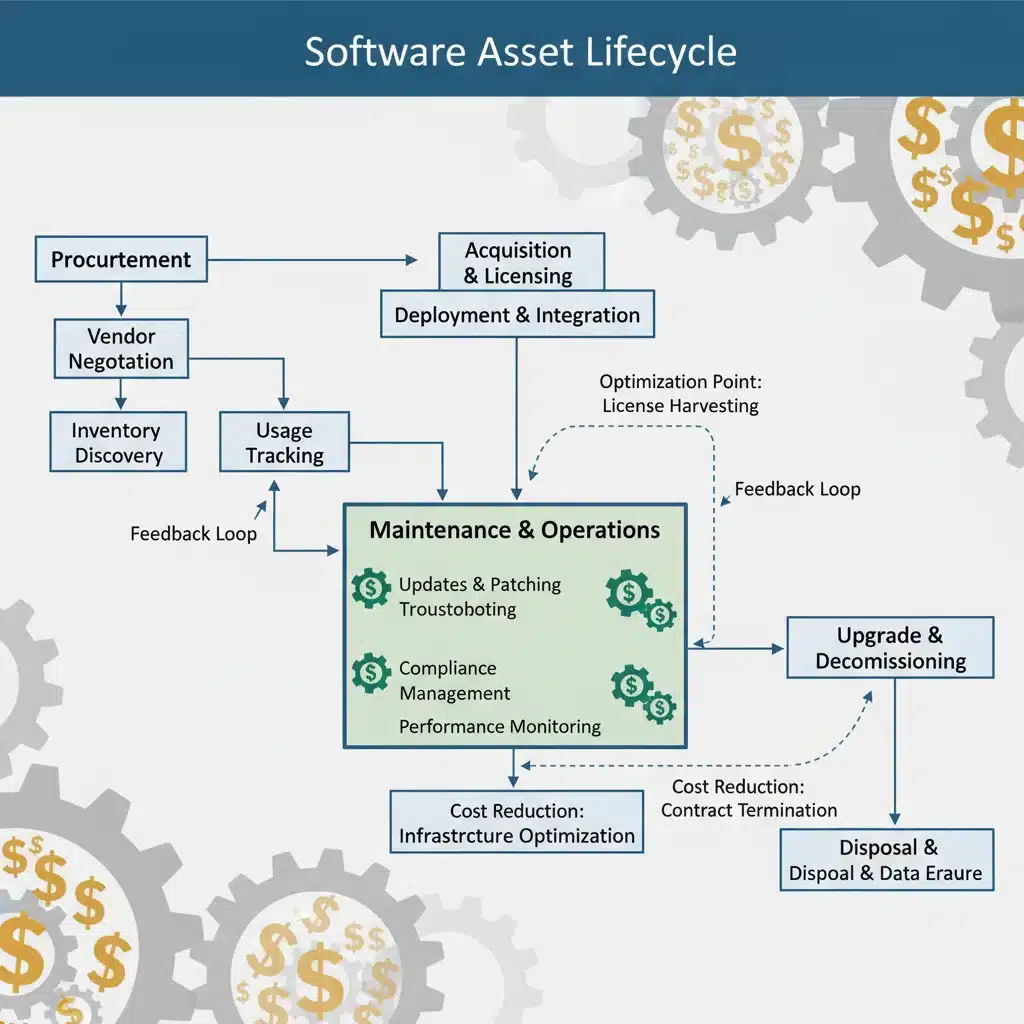
The Software Asset Management Lifecycle
To fully grasp the scope and impact of SAM, it’s helpful to understand the typical lifecycle of a software asset. SAM practices touch every stage of this lifecycle, ensuring optimization at each step:
- Planning and Budgeting: This initial phase involves identifying software needs, evaluating potential solutions, and allocating budget. SAM provides historical data on usage and costs to make these decisions more accurate and cost-effective.
- Procurement: The acquisition of software licenses. SAM ensures that purchases are aligned with actual needs, that contracts are favorable, and that licensing terms are understood and recorded.
- Deployment and Installation: The process of installing software on user devices or servers. SAM ensures that installations are tracked, compliant with licenses, and that only authorized software is deployed.
- Utilization and Maintenance: The ongoing use of software and its maintenance (updates, patches). SAM monitors usage to identify optimization opportunities and ensures that software remains secure and up-to-date.
- Retirement and Disposal: When software is no longer needed, it must be properly decommissioned. SAM ensures licenses are harvested, software is removed, and data is securely wiped, preventing unnecessary renewals and maintaining compliance.
By actively managing each stage, organizations can maximize the value of their software investments and realize significant Software Asset Management Savings throughout the entire lifecycle.
Implementing a Successful Software Asset Management Program
Achieving the promised 12% in Software Asset Management Savings requires a structured and consistent approach. Here are key steps and considerations for implementing a successful SAM program:
1. Secure Executive Buy-in and Cross-Functional Support:
SAM is not just an IT initiative; it has financial, legal, and operational implications. Gaining support from senior leadership and involving stakeholders from IT, finance, procurement, and legal departments is crucial for success. This ensures adequate resources, budget, and cooperation across the organization.
2. Define Clear Goals and Objectives:
What do you hope to achieve with SAM? Is it primarily cost reduction, compliance, or both? Setting specific, measurable, achievable, relevant, and time-bound (SMART) goals will provide direction and allow you to track progress. For instance, a goal might be: “Reduce annual software spending by 10% within 18 months through license optimization and reharvesting.”
3. Conduct a Comprehensive Software Inventory:
You can’t manage what you don’t know you have. This initial step involves discovering all software assets across your network. This often requires automated discovery tools that can scan devices and identify installed software. Manual methods are typically too time-consuming and prone to error in larger organizations.
4. Centralize License and Contract Data:
Gather all purchase records, license agreements, and contractual documentation. This data should be consolidated into a central repository, ideally a dedicated SAM tool, to provide a single source of truth for all software entitlements. This is critical for understanding your legal position and maximizing Software Asset Management Savings.
5. Implement Usage Monitoring:
Knowing what software is installed is one thing; knowing how it’s being used is another. Implement tools and processes to monitor actual software usage. This data is invaluable for identifying underutilized licenses, understanding user needs, and making informed decisions about future purchases. For SaaS applications, this means tracking active users and feature usage.
6. Establish SAM Policies and Processes:
Develop clear policies for software procurement, deployment, usage, and disposal. These policies should be communicated to all employees and enforced consistently. Processes should define roles and responsibilities for SAM activities, from requesting new software to decommissioning old licenses.
7. Invest in SAM Tools:
While manual tracking might suffice for very small organizations, larger enterprises will benefit immensely from dedicated Software Asset Management (SAM) tools. These tools automate inventory discovery, normalize software data, manage licenses, track usage, and provide reporting capabilities. They are essential for achieving scalable and sustainable Software Asset Management Savings.
8. Regular Review and Optimization:
SAM is not a one-time project; it’s an ongoing process. Regularly review your software estate, audit your licenses, and analyze usage data to identify new optimization opportunities. Software needs evolve, and your SAM program should evolve with them. This continuous improvement cycle is key to sustaining Software Asset Management Savings.
9. Employee Training and Awareness:
Educate employees about SAM policies and the importance of compliance. User behavior can significantly impact software costs and risks. Simple awareness campaigns can help prevent unauthorized installations and encourage responsible software usage.

Challenges and How to Overcome Them
While the benefits of Software Asset Management Savings are clear, organizations often encounter challenges during implementation:
- Data Complexity: The sheer volume and disparate nature of software data (licenses, contracts, usage) can be overwhelming. Solution: Invest in robust SAM tools that can automate data collection, normalization, and reconciliation.
- Resistance to Change: Employees or departments may resist new policies or increased oversight. Solution: Communicate the benefits of SAM clearly, emphasize compliance and cost savings, and involve stakeholders in the process.
- Vendor Complexity: Dealing with multiple vendors, each with unique and often complex licensing models, is challenging. Solution: Prioritize vendors with the highest spend or risk, and leverage SAM tools to standardize license tracking and compliance checks. Develop strong vendor management strategies.
- Cloud and SaaS Management: The shift to cloud-based software introduces new challenges in tracking consumption and optimizing subscriptions. Solution: Extend SAM practices to include SaaS management, focusing on active user tracking, subscription tier optimization, and identifying shadow IT in the cloud.
- Lack of Resources/Expertise: Implementing and maintaining SAM requires specialized skills and dedicated resources. Solution: Consider training internal staff, hiring SAM specialists, or engaging with third-party SAM service providers to augment internal capabilities.
The Future of Software Asset Management: Beyond Cost Savings
While Software Asset Management Savings remain a primary driver, the role of SAM is evolving. The future of SAM is increasingly integrated with broader IT and business strategies:
- IT Asset Management (ITAM) Integration: SAM is becoming a critical component of a wider ITAM strategy, which encompasses all IT assets (hardware, network, software). A holistic view provides even greater optimization potential.
- Cloud Cost Optimization: As organizations increasingly adopt multi-cloud strategies, SAM will play a pivotal role in managing and optimizing cloud spend, not just traditional on-premise software. FinOps (Financial Operations) practices are merging with SAM to achieve greater financial control over cloud resources.
- Security and Risk Management: SAM will continue to be a cornerstone of cybersecurity, helping organizations identify and mitigate vulnerabilities associated with unmanaged or outdated software.
- Data-Driven Decision Making: Advanced analytics and AI will further enhance SAM capabilities, providing deeper insights into software utilization, predicting future needs, and automating optimization recommendations.
- Sustainability: By optimizing software usage and reducing unnecessary purchases, SAM contributes to an organization’s sustainability efforts by minimizing energy consumption associated with unused IT resources and reducing the digital footprint.
The strategic importance of Software Asset Management Savings will only grow as technology continues to permeate every aspect of business operations. Organizations that embrace SAM as a continuous, strategic discipline will be better positioned to control costs, mitigate risks, and innovate effectively in the years to come.
Conclusion: Harnessing the Power of Software Asset Management Savings
For US organizations grappling with escalating IT costs and the complexities of software licensing, Software Asset Management (SAM) offers a clear and compelling solution. The average 12% annual reduction in unnecessary spending is not just a statistic; it’s a testament to the tangible financial benefits that a well-executed SAM program can deliver.
Beyond the immediate cost savings, SAM empowers organizations with greater visibility, reduced audit risk, improved operational efficiency, and a stronger foundation for strategic planning and cybersecurity. It transforms software from a potential financial drain into a well-managed, value-generating asset.
Implementing SAM requires commitment, resources, and a strategic approach, but the return on investment is undeniable. By embracing the principles of SAM – from comprehensive inventory and license management to usage monitoring and continuous optimization – businesses can unlock significant Software Asset Management Savings, enhance their competitive edge, and build a more resilient and agile IT environment for the future. Don’t let your software budget be a black hole; shine a light on it with SAM and reclaim your organization’s financial potential.