Cloud-Native Software Optimization: Achieve 30% Cost Savings in 90 Days
Anúncios
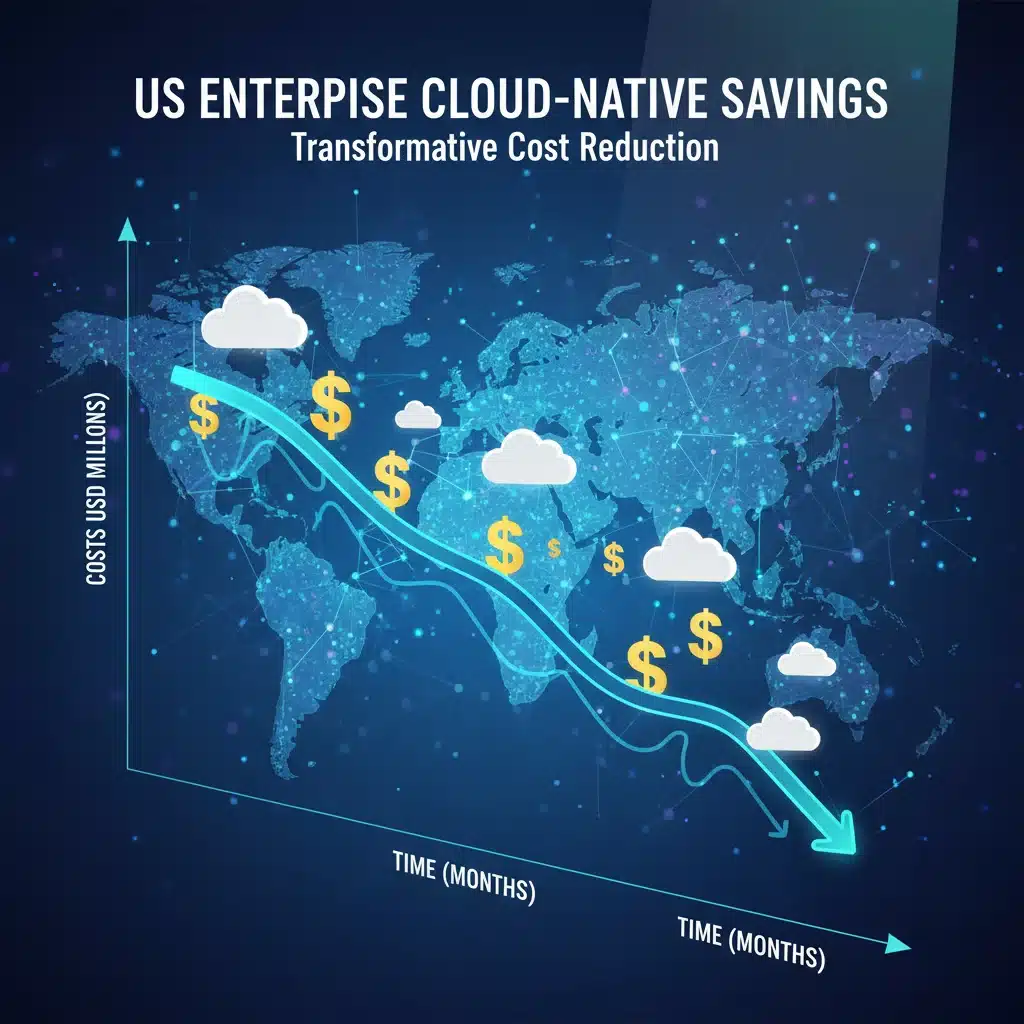
In today’s rapidly evolving digital landscape, US enterprises are increasingly embracing cloud-native architectures to drive innovation, enhance agility, and scale operations. While the benefits are undeniable, the promise of cost-efficiency often remains elusive, with many organizations finding their cloud expenditures spiraling out of control. The good news? Significant cloud-native cost savings are not just a pipe dream; they are an achievable reality. This comprehensive guide will equip US enterprises with the knowledge and actionable strategies to optimize their cloud-native software, targeting an impressive 30% reduction in costs within a mere 90 days.
Anúncios
The Cloud-Native Promise vs. Reality: Why Costs Escalate
Cloud-native adoption promises elasticity, scalability, and pay-as-you-go models, inherently suggesting cost-efficiency. However, without a strategic approach, these advantages can quickly turn into financial liabilities. Several factors contribute to escalating cloud costs:
- Lack of Visibility: Many organizations lack granular insight into their cloud spending, making it difficult to identify waste.
- Resource Sprawl: Unused or underutilized resources, forgotten instances, and orphaned storage contribute significantly to overhead.
- Inefficient Architecture: Poorly designed microservices, suboptimal container orchestration, and unoptimized serverless functions can lead to excessive resource consumption.
- Developer Autonomy Without Guardrails: While empowering developers is crucial, a lack of cost awareness and governance can result in unchecked resource provisioning.
- Vendor Lock-in and Licensing: Dependence on specific cloud providers or third-party licenses can limit negotiation power and flexibility.
- Operational Overheads: Manual management, inefficient CI/CD pipelines, and reactive troubleshooting can consume valuable engineering time, indirectly increasing costs.
Addressing these challenges is paramount to realizing substantial cloud-native cost savings. The journey begins with understanding where your money is going and then implementing targeted strategies to optimize every layer of your cloud-native stack.
Anúncios
Phase 1: Discovery and Assessment (Days 1-30) – Unearthing Cost Black Holes
The first 30 days are dedicated to gaining a clear, data-driven understanding of your current cloud expenditure. This phase is crucial for identifying areas ripe for cloud-native cost savings.
1. Comprehensive Cloud Spend Audit
- Centralized Billing Analysis: Consolidate all cloud bills and identify spending patterns across different departments, projects, and services. Utilize cloud provider tools (e.g., AWS Cost Explorer, Azure Cost Management, Google Cloud Billing Reports) for detailed breakdowns.
- Tagging and Resource Attribution: Implement a robust tagging strategy. Every resource should be tagged with ownership, project, environment (dev, staging, prod), and cost center. This allows for accurate cost attribution and accountability.
- Resource Inventory: Conduct a thorough inventory of all deployed resources. Identify active, idle, and orphaned resources.
2. Performance and Utilization Analysis
- Monitoring Tools: Leverage APM (Application Performance Monitoring) and infrastructure monitoring tools (e.g., Datadog, New Relic, Prometheus, Grafana) to gather metrics on CPU, memory, network I/O, and disk usage for all services and instances.
- Identify Underutilized Resources: Look for instances or containers consistently running at low utilization rates. This is a prime target for rightsizing or consolidation, directly impacting cloud-native cost savings.
- Identify Over-provisioned Resources: Conversely, detect resources provisioned with far more capacity than they actually need.
3. Architecture Review for Optimization Opportunities
- Microservices Dependency Mapping: Understand the dependencies between your microservices. Are there redundant services? Can any be consolidated or refactored for better efficiency?
- Container and Orchestration Review: Analyze your Kubernetes or container orchestration setup. Are pods over-resourced? Is autoscaling configured optimally? Are there idle clusters?
- Serverless Function Analysis: For serverless components, review execution times, memory allocation, and invocation patterns. Over-allocating memory to a Lambda function, for example, directly increases its cost.
- Data Storage and Transfer Analysis: Evaluate your storage tiers. Are you using expensive hot storage for archival data? Identify excessive data egress costs, which can be a significant hidden expense.
4. Establish Baselines and KPIs
- Current Spend Baseline: Document your current monthly cloud expenditure in detail. This will be your benchmark for measuring cloud-native cost savings.
- Key Performance Indicators (KPIs): Define specific, measurable, achievable, relevant, and time-bound (SMART) KPIs for cost optimization. Examples include ‘Cost per transaction,’ ‘Cost per user,’ ‘Compute cost per service,’ or ‘Storage cost per GB.’
By the end of this phase, you should have a clear picture of your current spending, identified key areas of waste, and established the metrics by which you will measure your success. This foundational work is indispensable for achieving targeted cloud-native cost savings.

Phase 2: Implementation and Optimization (Days 31-60) – Activating Savings
With a comprehensive understanding of your cloud spend, the next 30 days are about implementing targeted changes to realize immediate cloud-native cost savings.
1. Rightsizing and Resource Consolidation
- Compute Instances: Based on the utilization data from Phase 1, rightsize your VMs, containers, and serverless functions. Downgrade instances that are consistently underutilized. Consider burstable instances for workloads with fluctuating demands.
- Container Resource Limits: Fine-tune CPU and memory limits for your Kubernetes pods. Over-provisioning here can lead to wasted resources and higher costs.
- Storage Optimization: Migrate infrequently accessed data to cheaper storage tiers (e.g., S3 Glacier, Azure Archive Storage). Implement lifecycle policies to automate this process. Delete unattached or orphaned storage volumes.
- Database Optimization: Review database instance sizes and scaling configurations. Utilize managed database services’ auto-scaling features where appropriate.
2. Leveraging Cloud-Native Features and Pricing Models
- Reserved Instances (RIs) and Savings Plans: For stable, predictable workloads, commit to RIs or Savings Plans. This can lead to substantial discounts (up to 70%) for compute resources. Analyze your historical usage to determine the optimal commitment.
- Spot Instances: For fault-tolerant, stateless, or batch workloads, utilize spot instances. These offer significant discounts (up to 90%) but can be interrupted. Integrate them carefully into your architecture.
- Serverless Architecture Refinement: Optimize serverless functions by minimizing execution duration and memory usage. Review cold start issues and optimize dependencies.
- Managed Services Adoption: Where appropriate, switch from self-managed services to fully managed cloud provider services. While sometimes seemingly more expensive upfront, they often reduce operational overheads and can be more cost-effective in the long run.
3. Network and Data Transfer Optimization
- Minimize Egress Traffic: Data leaving the cloud (egress) is often the most expensive. Optimize application design to keep data within the same region or availability zone where possible.
- Content Delivery Networks (CDNs): Use CDNs to cache static content closer to users, reducing origin server load and egress costs.
- Network Load Balancers: Ensure your load balancers are appropriately scaled and configured.
4. Automation and Infrastructure as Code (IaC)
- Automated Shutdown/Startup: Implement automation to shut down non-production environments (development, staging) during off-hours or weekends.
- IaC for Consistency: Use tools like Terraform, CloudFormation, or Azure Resource Manager to define and manage your infrastructure. This ensures consistency, prevents resource sprawl, and makes it easier to track and optimize resources.
- Automated Scaling: Configure horizontal and vertical autoscaling for your compute resources to dynamically adjust capacity based on demand, preventing over-provisioning.
This phase is about actively making changes and observing their impact. Continuous monitoring is essential to validate the effectiveness of your optimization efforts and ensure that cloud-native cost savings are being realized without compromising performance or reliability.
Phase 3: Monitoring, Governance, and Continuous Improvement (Days 61-90 and Beyond) – Sustaining Savings
The final 30 days of the initial push, and indeed the ongoing strategy, focus on embedding cost optimization into your organizational culture and processes to sustain cloud-native cost savings.
1. Establish FinOps Practices
- Cross-Functional Collaboration: Foster collaboration between finance, engineering, and operations teams. FinOps is not just about cost; it’s about maximizing business value from cloud spend.
- Cost Allocation and Chargeback: Implement clear cost allocation mechanisms. Charge back cloud costs to specific departments or projects to foster accountability and encourage cost-conscious behavior.
- Regular Cost Reviews: Schedule weekly or bi-weekly meetings to review cloud spend, analyze trends, and discuss new optimization opportunities.
3. Continuous Monitoring and Reporting
- Dashboards: Create centralized dashboards (e.g., using Grafana, Power BI, or cloud provider dashboards) that provide real-time visibility into cloud spend, resource utilization, and cost optimization KPIs.
- Automated Reports: Generate regular reports on cost savings achieved, areas of concern, and future optimization plans.
4. Governance and Policy Enforcement
- Resource Naming Conventions: Enforce strict naming conventions for all cloud resources to ensure consistency and facilitate tracking.
- Policy-as-Code: Implement policies (e.g., using AWS Organizations Service Control Policies, Azure Policies, OPA Gatekeeper for Kubernetes) to prevent the creation of unauthorized or overly expensive resources.
- Idle Resource Detection and Remediation: Automate the detection and remediation (e.g., deletion, archiving) of idle or orphaned resources.
5. Developer Education and Empowerment
- Cost Awareness Training: Educate developers on the cost implications of their architectural and coding decisions. Provide them with tools and dashboards to monitor the cost impact of their services.
- Best Practices Guides: Develop and disseminate best practices for cost-efficient cloud-native development.
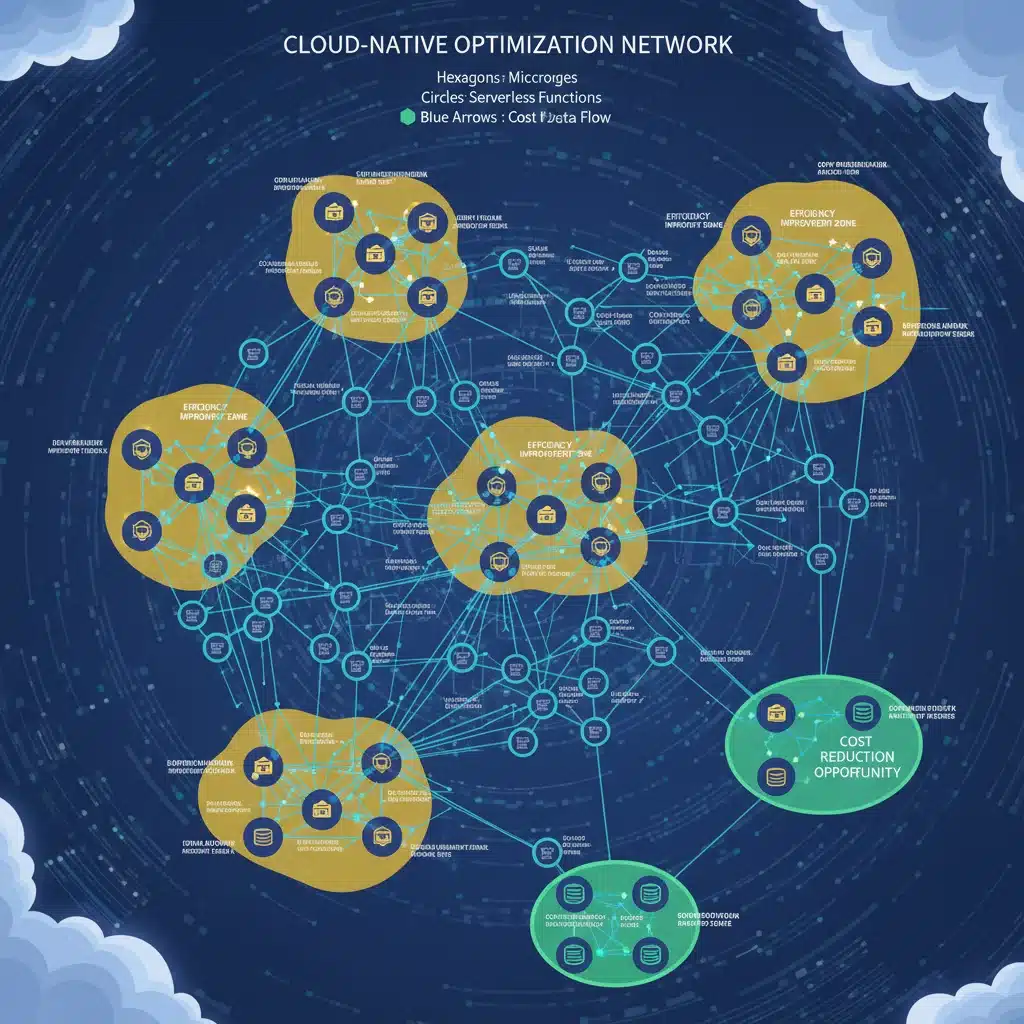
Advanced Strategies for Sustained Cloud-Native Cost Savings
Beyond the initial 90-day sprint, consider these advanced strategies to deepen and sustain your cloud-native cost savings:
1. Workload-Specific Optimization
- Data Lakes and Analytics: Optimize data ingestion, processing, and storage in data lakes. Use appropriate compute engines (e.g., Spark, Presto, serverless queries) for different analytical workloads.
- Machine Learning Workloads: Manage GPU instances efficiently, leverage spot instances for training, and optimize model serving infrastructure.
- Container Image Optimization: Reduce the size of your container images to decrease build times, deployment times, and storage costs.
2. Multi-Cloud and Hybrid Cloud Strategies
- Workload Placement: Strategically place workloads on the cloud provider that offers the best price-performance for that specific task.
- Vendor Negotiation: Use a multi-cloud strategy to increase your leverage when negotiating with cloud providers.
3. FinOps Tools and Platforms
- Third-Party Cost Management Platforms: Explore tools like CloudHealth, Apptio Cloudability, or Flexera One that offer advanced analytics, recommendations, and automation for cloud cost management across multiple providers.
- Custom Dashboards and Reporting: Build custom dashboards using data from your cloud providers and internal systems to provide highly specific insights tailored to your business needs.
4. Performance Engineering and Code Optimization
- Application-Level Efficiency: Sometimes, the most significant cloud-native cost savings come from optimizing the application code itself. Efficient algorithms, reduced I/O operations, and optimized database queries can drastically reduce resource consumption.
- Caching Strategies: Implement robust caching mechanisms (e.g., Redis, Memcached) to reduce database load and improve response times, thus requiring fewer compute resources.
5. Leveraging Open Source Alternatives
- Database Alternatives: Consider open-source database solutions like PostgreSQL or MySQL over proprietary alternatives, especially for non-critical workloads.
- Observability Stacks: Explore open-source observability tools (e.g., Prometheus, Grafana, Jaeger) as alternatives to commercial APM solutions, which can reduce licensing costs.
Overcoming Challenges in Achieving Cloud-Native Cost Savings
While the path to cloud-native cost savings is clear, organizations may encounter several hurdles:
- Organizational Silos: Lack of communication between engineering, finance, and product teams can impede optimization efforts. FinOps principles are crucial here.
- Technical Debt: Legacy systems or poorly designed cloud-native applications can be difficult to optimize without significant refactoring. Prioritize areas with the highest potential ROI.
- Fear of Performance Impact: Teams may be hesitant to rightsize resources due to concerns about performance degradation. Emphasize data-driven decisions and A/B testing.
- Lack of Expertise: Cloud cost optimization requires specialized skills. Invest in training your teams or consider partnering with experts.
- Vendor Complexity: Each cloud provider has its own pricing models and services, making cross-platform optimization challenging.
Addressing these challenges proactively will ensure a smoother and more successful journey towards significant cloud-native cost savings.
Measuring Your 30% Cost Savings in 90 Days
To definitively claim a 30% reduction, robust measurement is key:
- Establish a Clear Baseline: As mentioned in Phase 1, have a documented baseline of your cloud spend before starting optimization efforts.
- Track Progress Daily/Weekly: Monitor your spending dashboards regularly to see the immediate impact of your changes.
- Compare Against Baseline: At the 90-day mark, compare your total cloud spend (or relevant KPIs like cost per transaction) against your initial baseline.
- Account for Growth: If your business has grown during this period, normalize your cost savings by considering increased usage or new features. For example, if usage increased by 10% but costs decreased by 20%, your effective savings are even greater.
- Report and Celebrate: Communicate your achievements across the organization. This builds momentum and encourages continued cost-conscious behavior.
Achieving a 30% reduction in cloud-native cost savings within 90 days is an ambitious but entirely feasible goal for US enterprises committed to strategic optimization. It requires a blend of technical expertise, organizational alignment, and a continuous improvement mindset.
Conclusion: A Path to Sustainable Cloud-Native Cost Efficiency
Optimizing cloud-native software for significant cost savings is not a one-time project but an ongoing journey. By following the structured three-phase approach outlined above – Discovery and Assessment, Implementation and Optimization, and Monitoring, Governance, and Continuous Improvement – US enterprises can systematically identify and eliminate waste, leverage cloud-native features effectively, and instill a culture of cost awareness.
The 30% cloud-native cost savings target in 90 days is a powerful motivator, demonstrating that with focused effort, substantial financial benefits can be unlocked quickly. Beyond the immediate savings, this process builds a foundation for sustainable cloud financial management, ensuring that your cloud-native investments consistently deliver maximum value and competitive advantage. Start your optimization journey today and transform your cloud spending into a strategic asset.