ERP Software Selection: A 2026 Guide for US Businesses

Anúncios
In the rapidly evolving landscape of 2026, US businesses face unprecedented challenges and opportunities. Digital transformation is no longer a buzzword but a fundamental necessity for survival and growth. At the heart of this transformation lies Enterprise Resource Planning (ERP) software. Choosing the right ERP system is arguably one of the most critical strategic decisions a company can make, impacting everything from operational efficiency and financial management to customer satisfaction and competitive advantage. This comprehensive guide is designed to assist US companies in their ERP software selection journey, offering insights, best practices, and a roadmap for success in 2026 and beyond.
Anúncios
The stakes are high. A well-chosen ERP system can streamline processes, provide real-time data for informed decision-making, and foster seamless communication across departments. Conversely, a poorly selected or implemented ERP can lead to significant financial losses, operational disruptions, and a decline in employee morale. Therefore, a meticulous approach to ERP software selection is not just recommended; it’s imperative.
Understanding the Modern ERP Landscape in 2026
Before diving into the specifics of ERP software selection, it’s crucial to understand the current state of the ERP market. 2026 sees a continued shift towards cloud-based solutions, AI and machine learning integration, enhanced mobile capabilities, and a focus on industry-specific functionalities. Businesses are no longer looking for generic solutions; they demand systems tailored to their unique needs and challenges.
Anúncios
The Rise of Cloud ERP
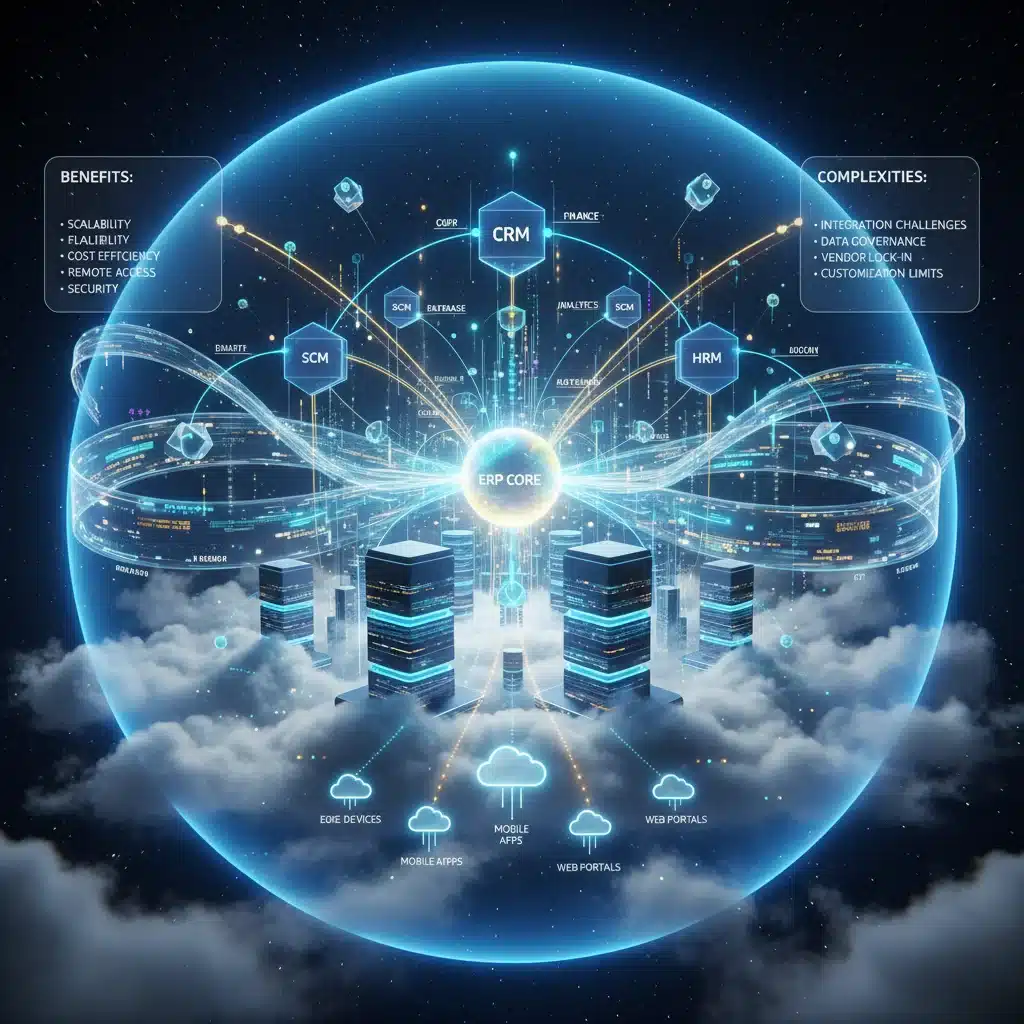
Cloud ERP has become the dominant deployment model, offering scalability, flexibility, and reduced upfront infrastructure costs. SaaS (Software as a Service) ERP solutions are particularly attractive for their subscription-based pricing and automatic updates. For US businesses, this means faster deployment, easier maintenance, and the ability to access data from anywhere, anytime. However, considerations around data security, compliance (especially for industries like healthcare or finance), and internet dependency remain vital.
AI and Machine Learning Integration
Artificial Intelligence (AI) and Machine Learning (ML) are no longer futuristic concepts in ERP; they are embedded functionalities. These technologies enhance predictive analytics, automate routine tasks, optimize supply chains, improve demand forecasting, and personalize customer experiences. When evaluating ERP software selection, look for vendors that offer robust AI/ML capabilities that can genuinely add value to your operations.
Mobile Accessibility and User Experience (UX)
In a world increasingly reliant on mobile devices, a modern ERP system must offer intuitive and powerful mobile applications. Employees need to access critical information and perform tasks on the go, whether they are in the warehouse, on the sales floor, or traveling. A strong emphasis on user experience (UX) is also paramount; an ERP system, no matter how powerful, will fail if employees find it difficult or frustrating to use.
Industry-Specific Solutions
Generic ERP solutions often fall short in meeting the nuanced demands of specific industries. Many ERP vendors now offer highly specialized versions or modules designed for manufacturing, retail, healthcare, professional services, and other sectors. These industry-specific solutions come pre-configured with best practices and compliance features relevant to that industry, significantly reducing customization needs and accelerating time to value. This is a critical factor in successful ERP software selection.
Phase 1: Defining Your Business Needs and Objectives
The first and most critical step in ERP software selection is a thorough internal assessment. Without a clear understanding of your current processes, pain points, and future aspirations, any ERP evaluation will be akin to shooting in the dark.
Identify Current Challenges and Pain Points
Begin by documenting the inefficiencies, bottlenecks, and frustrations within your current systems and processes. Where are data silos? Which manual tasks consume excessive time? What information is difficult to access or analyze? Involve key stakeholders from all departments – finance, operations, sales, marketing, human resources, IT – to gather a comprehensive list of challenges. This collective understanding forms the foundation for your ERP software selection criteria.
Define Strategic Business Objectives
An ERP system is a strategic investment, not just an IT project. How will it help you achieve your long-term business goals? Do you aim to increase market share, reduce operational costs, improve customer retention, expand into new markets, or enhance product innovation? Aligning your ERP objectives with your overall business strategy ensures that the chosen system supports your growth trajectory.
Document Functional Requirements
Translate your challenges and objectives into concrete functional requirements. What specific capabilities does the new ERP system need to have? This includes modules for:
- Financial Management: General ledger, accounts payable/receivable, budgeting, forecasting, fixed assets, financial reporting.
- Supply Chain Management (SCM): Inventory management, procurement, order management, warehouse management, logistics.
- Manufacturing: Production planning, shop floor control, quality management, material requirements planning (MRP).
- Customer Relationship Management (CRM): Sales automation, marketing automation, customer service, lead management.
- Human Resources (HRM): Payroll, talent management, time and attendance, benefits administration.
- Project Management: Project planning, resource allocation, expense tracking, billing.
- Business Intelligence (BI) & Analytics: Reporting, dashboards, data visualization, predictive analytics.
Prioritize these requirements as ‘must-have,’ ‘nice-to-have,’ and ‘future considerations.’ This prioritization is key to effective ERP software selection.
Consider Non-Functional Requirements
Beyond specific features, think about non-functional aspects:
- Scalability: Can the system grow with your business?
- Integration: How well does it integrate with existing systems (e.g., e-commerce platforms, specialized industry software)?
- Security: What security protocols are in place?
- Usability: Is the interface intuitive and user-friendly?
- Performance: Can it handle your transaction volumes efficiently?
- Compliance: Does it meet industry-specific regulations (e.g., HIPAA, SOX, GDPR, state-specific tax laws)?
Phase 2: Vendor and Solution Research
Once your requirements are clearly defined, you can begin researching potential ERP vendors and solutions. This phase requires thorough investigation and a systematic approach to ERP software selection.
Market Research and Shortlisting
Start with broad market research. Utilize industry reports, analyst reviews (Gartner, Forrester), and peer recommendations. Look for vendors known for their strength in your industry or for specific functionalities you’ve identified as critical. Create a longlist of potential vendors, then narrow it down to a shortlist of 3-5 that appear to be the best fit for your US business.
Request for Information (RFI) and Request for Proposal (RFP)
For your shortlisted vendors, issue an RFI to gather general information about their company, products, and services. Follow up with a detailed RFP that outlines your specific functional and non-functional requirements, your budget, timeline, and any unique business processes. The RFP should ask vendors to detail how their solution addresses each of your ‘must-have’ requirements and provide pricing models for both software and implementation services. A well-crafted RFP is crucial for effective ERP software selection.
Vendor Demonstrations and Proof of Concept (POC)
Schedule personalized demonstrations with each shortlisted vendor. Insist on seeing how the system handles your specific use cases, not just generic features. Provide vendors with sample data or scenarios relevant to your business. For complex or mission-critical functionalities, consider requesting a Proof of Concept (POC) where the vendor configures a small part of their system to demonstrate its capability with your actual data and processes. This hands-on experience is invaluable for ERP software selection.
Phase 3: Evaluation and Due Diligence
This phase is where you critically assess each vendor and their proposed solution against your defined criteria. It’s more than just looking at features; it’s about evaluating the entire partnership.
Feature-Functionality Fit
Score each vendor’s solution based on how well it meets your prioritized functional requirements. Pay close attention to how much customization would be needed to bridge any gaps. Extensive customization can lead to higher costs, longer implementation times, and difficulties with future upgrades.
Technology and Architecture
Evaluate the underlying technology. Is it modern, scalable, and secure? Does it support open APIs for easier integration? For cloud solutions, inquire about data center locations (especially relevant for US data sovereignty), uptime guarantees, and disaster recovery plans. Understand the vendor’s roadmap for future development and innovation.
Vendor Reputation and Support
Investigate the vendor’s track record. How stable are they financially? What is their reputation for customer support, both during and after implementation? Check references from companies similar to yours in size and industry. Ask about their support model, response times, and available training resources. A strong vendor partnership is key to successful ERP software selection.
Total Cost of Ownership (TCO)
Beyond the initial software licensing or subscription fees, calculate the TCO over a 5-10 year period. This includes:
- Software costs: Licenses, subscriptions, modules.
- Implementation costs: Consulting fees, data migration, customization, integration.
- Hardware costs: If on-premise, servers, networking equipment.
- Training costs: For all users.
- Maintenance and support costs: Annual fees, upgrades.
- Opportunity costs: Downtime during implementation, productivity dips.
A lower upfront cost doesn’t always mean a lower TCO. Be thorough in your financial analysis during ERP software selection.
Phase 4: Implementation Strategy and Planning
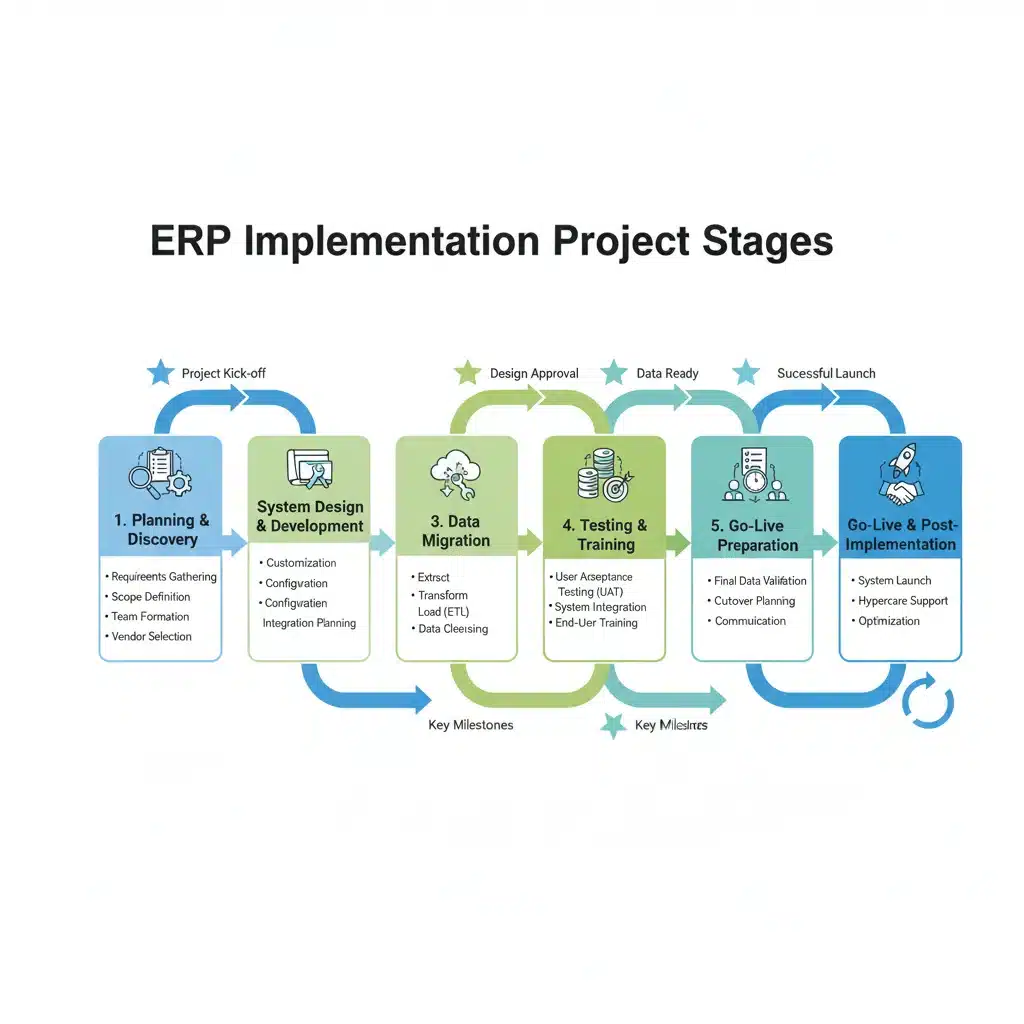
Once you’ve made your ERP software selection, the next critical phase is planning the implementation. A well-executed implementation is just as important as choosing the right software.
Form an Internal Project Team
Assemble a dedicated project team with representatives from all affected departments. This team should include a strong project manager, subject matter experts, and IT personnel. Their involvement is crucial for data migration, process mapping, testing, and user adoption. Ensure they have the authority and time to dedicate to the project.
Choose an Implementation Partner
Unless the vendor provides direct implementation services (and even then, sometimes an independent partner is beneficial), you’ll likely need to select an implementation partner. Look for partners with proven experience in your industry and with the specific ERP system you’ve chosen. Check their references, understand their methodology, and ensure cultural fit. The partner’s expertise significantly influences the success of your ERP software selection and deployment.
Develop a Detailed Project Plan
Work with your vendor/partner to create a comprehensive project plan. This should include:
- Scope definition: Clearly outline what’s in and out of scope.
- Timeline: Realistic milestones and deadlines.
- Resource allocation: Who is responsible for what?
- Data migration strategy: How will historical data be moved and validated?
- Integration plan: How will the ERP connect with other systems?
- Testing plan: Unit testing, integration testing, user acceptance testing (UAT).
- Training plan: For all user groups.
- Change management plan: How will you manage employee resistance and encourage adoption?
Regular communication and clear governance are vital throughout the implementation process.
Phase 5: Post-Implementation and Continuous Improvement
The go-live date is not the end of the journey; it’s the beginning. Post-implementation activities are crucial for maximizing your ERP investment.
Monitor and Optimize Performance
After go-live, closely monitor the system’s performance and user adoption. Gather feedback from users, identify any new bottlenecks, and address issues promptly. ERP systems are not ‘set it and forget it’; they require continuous optimization to adapt to changing business needs and leverage new features. This ongoing commitment is part of successful ERP software selection.
User Training and Support
Ongoing training is essential. As new features are released or business processes evolve, ensure users are adequately trained. Establish clear support channels for users to report issues and ask questions. High user adoption directly correlates with the ROI of your ERP system.
Leverage Analytics and Reporting
One of the primary benefits of a modern ERP is its ability to provide actionable insights. Regularly utilize the system’s reporting and analytics capabilities to track key performance indicators (KPIs), identify trends, and make data-driven decisions. This transforms the ERP from a transactional system into a strategic business intelligence tool.
Stay Updated with Vendor Releases
ERP vendors frequently release updates, patches, and new functionalities. Stay informed about these releases and plan for regular upgrades to ensure your system remains secure, performant, and equipped with the latest features. For cloud ERP, these updates are often seamless, but it’s still important to understand their impact.
Key Considerations for US Companies in 2026
Beyond the general ERP software selection process, US companies in 2026 have specific factors to consider:
Compliance and Regulatory Requirements
US businesses operate under a complex web of federal, state, and local regulations. Your chosen ERP system must support compliance with financial reporting standards (e.g., GAAP), tax regulations, industry-specific mandates (e.g., HIPAA for healthcare, FDA for life sciences), and data privacy laws. Ensure the vendor understands and supports these requirements.
Data Security and Privacy
With increasing cyber threats, data security is paramount. Inquire about the vendor’s security infrastructure, encryption protocols, access controls, and regular security audits. Understand how they handle data privacy in accordance with US laws and international standards if you operate globally. This is a non-negotiable aspect of ERP software selection.
Integration with US-Specific Systems
Consider how the ERP will integrate with other systems common in the US market, such as specific payment gateways, tax calculation services, payroll providers, or e-commerce platforms. Seamless integration minimizes manual effort and data discrepancies.
Scalability for Growth in the US Market
The US market offers significant growth potential. Your ERP system should be capable of scaling with your business, whether that means adding new users, expanding into new locations, acquiring other companies, or handling increased transaction volumes. Cloud ERP solutions often excel in this area due to their inherent scalability.
Common Pitfalls to Avoid in ERP Software Selection
Even with a well-planned approach, some common mistakes can derail an ERP project. Being aware of these can help you navigate your ERP software selection more effectively:
- Underestimating the Importance of Change Management: Technology alone doesn’t solve problems; people do. Neglecting to prepare employees for the change, communicate benefits, and provide adequate training can lead to resistance and low adoption.
- Ignoring Data Migration Complexity: Moving data from old systems to a new ERP is often more complex and time-consuming than anticipated. Poor data quality or an inadequate migration strategy can cause significant issues.
- Focusing Only on Upfront Costs: As discussed, TCO is more important than initial price. A cheaper system might have hidden costs in customization, maintenance, or poor performance.
- Lack of Executive Sponsorship: An ERP project needs strong support from senior leadership. Without it, resource allocation, cross-departmental cooperation, and decision-making can suffer.
- Over-Customization: While some customization is often necessary, over-customizing an ERP system can make upgrades difficult, increase maintenance costs, and deviate from best practices. Aim for configuration over customization where possible.
- Inadequate Testing: Rushing the testing phase can lead to critical errors surfacing after go-live, causing disruptions and frustration. Thorough testing, including UAT, is non-negotiable.
- Poor Vendor/Partner Selection: The relationship with your ERP vendor and implementation partner is long-term. Choose partners who are reliable, knowledgeable, and a good cultural fit for your organization.
The Future of ERP: What to Expect Beyond 2026
As you embark on your ERP software selection journey, it’s also wise to consider the trajectory of ERP technology. Beyond 2026, we can expect:
- Hyper-automation: Increased integration of AI, ML, Robotic Process Automation (RPA), and other intelligent technologies to automate even more complex business processes.
- Composability: A move towards more modular, flexible ERP systems that allow businesses to easily plug and play different components and services to build a highly customized, agile solution.
- Sustainability Integration: ERP systems will increasingly incorporate features to track and report on environmental, social, and governance (ESG) metrics, helping companies manage their sustainability initiatives.
- Enhanced Data Fabric: More sophisticated data management capabilities that provide a unified, real-time view of all enterprise data, regardless of its source, enabling deeper insights.
- Metaverse and Digital Twin Integration: While still nascent, some industries may start exploring how ERP data can feed into digital twin simulations or even metaverse applications for design, training, and operational optimization.
Choosing an ERP system that is adaptable and built on a modern, open architecture will better position your US business to embrace these future innovations.
Conclusion
ERP software selection is a transformative undertaking for any US business in 2026. It demands careful planning, thorough research, and a strategic vision. By meticulously defining your needs, evaluating vendors comprehensively, planning for a robust implementation, and committing to continuous improvement, your company can select an ERP system that not only addresses current challenges but also serves as a powerful engine for future growth and innovation. The right ERP is an investment in your company’s operational excellence, competitive edge, and long-term success in the dynamic US market.
Remember, the goal is not just to implement new software, but to transform your business operations, empower your employees, and deliver greater value to your customers. Approach your ERP software selection with diligence and foresight, and the rewards will be substantial.