Implementing Digital Transformation: A 12-Month Roadmap for Business Modernization

Anúncios
In today’s rapidly evolving business landscape, the imperative for companies to embrace digital transformation is no longer a matter of ‘if’ but ‘when’ and ‘how.’ The year 2026 is fast approaching, and organizations that fail to modernize their infrastructure and operations risk falling behind competitors, losing market share, and becoming obsolete. A well-structured digital transformation plan is not just about adopting new technologies; it’s a holistic shift in culture, processes, and customer engagement. This article outlines a comprehensive 12-month roadmap designed to guide your organization through the complexities of digital transformation, ensuring a streamlined modernization of infrastructure and a significant boost in competitiveness.
Anúncios
The journey of digital transformation is multifaceted, requiring careful planning, robust execution, and continuous optimization. It touches every aspect of a business, from customer interactions and internal workflows to data management and strategic decision-making. Our proposed 12-month digital transformation plan is broken down into four distinct phases, each lasting three months, allowing for focused effort and measurable progress. By following this structured approach, businesses can systematically dismantle old inefficiencies, integrate cutting-edge solutions, and cultivate an agile, future-proof operational model. The ultimate goal is to not only survive but thrive in the digital age, leveraging technology to create new value, enhance customer experiences, and unlock unprecedented growth opportunities. This detailed guide will equip you with the knowledge and actionable steps needed to navigate this transformative journey successfully.
The Urgency of a Digital Transformation Plan for 2026
The global marketplace is more interconnected and dynamic than ever before. Consumer expectations are soaring, driven by personalized digital experiences offered by industry leaders. To meet these demands and remain relevant, businesses must invest in a robust digital transformation plan. This isn’t merely about upgrading software or hardware; it’s about reimagining business models, optimizing processes, and fostering a culture of innovation. By 2026, organizations that have successfully implemented a digital transformation strategy will be characterized by increased operational efficiency, enhanced customer satisfaction, greater agility, and a stronger competitive position.
Anúncios
The stakes are high. Companies that resist digital change often face declining revenues, reduced market share, and an inability to adapt to new challenges. Conversely, early adopters of a strategic digital transformation plan report significant improvements in productivity, better decision-making through data analytics, and the ability to create new revenue streams. This 12-month roadmap provides a clear pathway to achieving these benefits, ensuring that your organization is not just keeping pace, but setting the pace within your industry. It emphasizes a structured approach, breaking down the seemingly daunting task of transformation into manageable, actionable steps. This allows for continuous evaluation and adaptation, crucial for success in a rapidly changing technological landscape. Embracing this plan means committing to a future where technology serves as an enabler for unprecedented business growth and resilience.
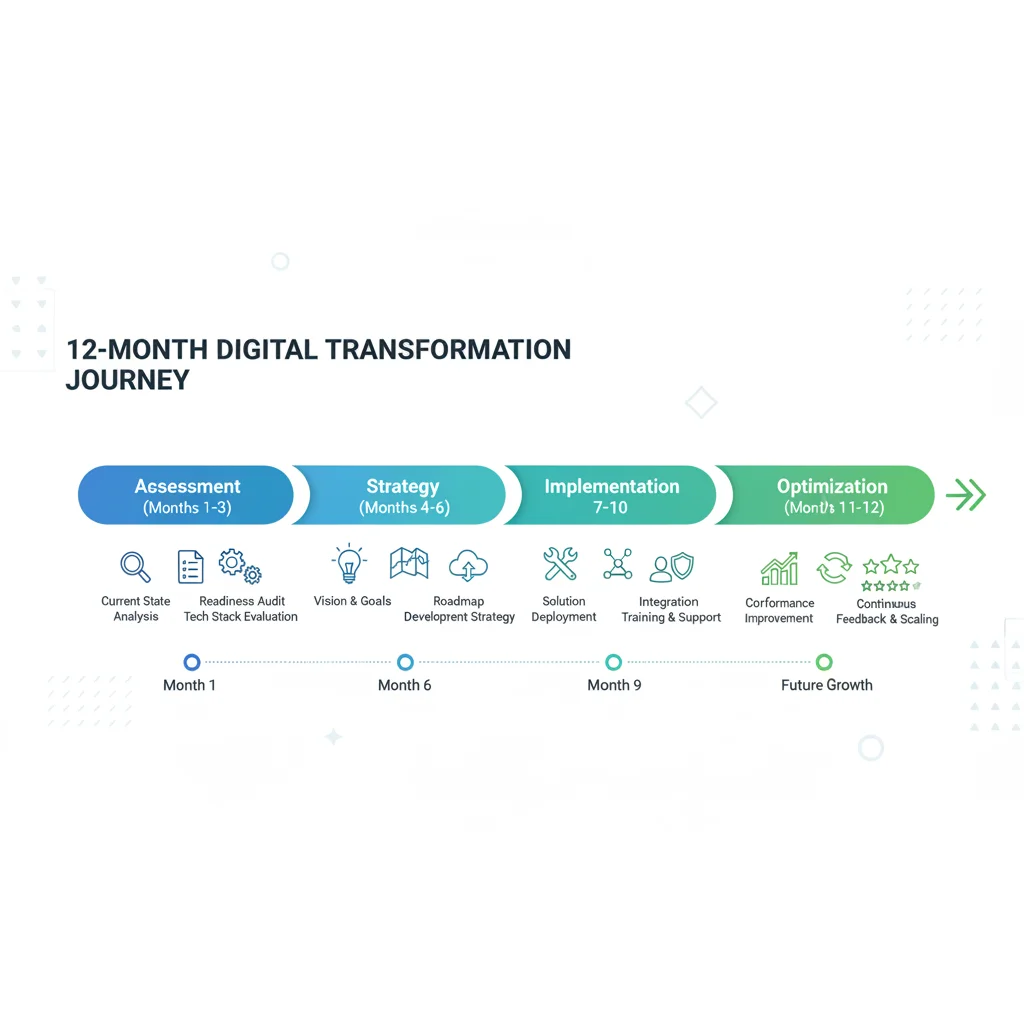
Phase 1: Assessment and Strategy Formulation (Months 1-3)
The initial phase of any successful digital transformation plan is dedicated to thorough assessment and strategic planning. This foundational period ensures that all subsequent efforts are aligned with the organization’s overarching goals and current realities.
Month 1: Current State Analysis and Vision Setting
- Comprehensive Audit: Begin with a detailed audit of existing IT infrastructure, business processes, and current digital capabilities. Identify bottlenecks, outdated systems, and areas ripe for automation or improvement. This includes evaluating legacy systems, current software stacks, network infrastructure, and data storage solutions. Understand their limitations and how they hinder current operations.
- Stakeholder Engagement: Conduct interviews and workshops with key stakeholders across all departments – IT, marketing, sales, operations, HR, and finance. Gather insights on their challenges, needs, and aspirations for future digital capabilities. This ensures buy-in and a holistic understanding of organizational requirements.
- Define the Vision: Based on the audit and stakeholder input, articulate a clear, compelling vision for your digital future. What does a digitally transformed organization look like by 2026? How will it impact customer experience, employee productivity, and overall business performance? This vision should be ambitious yet achievable, serving as a guiding star for the entire digital transformation plan.
- Competitive Benchmarking: Analyze competitors’ digital strategies and identify industry best practices. Understand what successful digital transformation looks like in your sector and identify opportunities to differentiate your approach. This external perspective is crucial for setting realistic and competitive goals.
Month 2: Gap Analysis and Technology Evaluation
- Identify Gaps: Compare your current state with the defined digital vision. Pinpoint the specific gaps in technology, skills, processes, and organizational culture that need to be addressed. This gap analysis forms the core of your transformation strategy.
- Technology Scouting: Research and evaluate potential technologies and solutions that can bridge these gaps. This might include cloud computing platforms (e.g., AWS, Azure, Google Cloud), AI/ML tools, IoT devices, CRM systems (e.g., Salesforce, HubSpot), ERP solutions (e.g., SAP, Oracle), advanced analytics platforms, and cybersecurity measures. Focus on scalability, integration capabilities, and vendor reliability.
- Feasibility Studies: Conduct preliminary feasibility studies for selected technologies. Assess their potential impact, implementation challenges, and alignment with your budget and resources. Engage technology consultants if necessary to gain expert insights.
- Risk Assessment: Identify potential risks associated with the transformation, including technological obsolescence, data security breaches, integration complexities, and resistance to change. Develop preliminary mitigation strategies.
Month 3: Strategy Formulation and Roadmap Development
- Develop the Strategy: Formulate a detailed digital transformation plan outlining specific initiatives, objectives, and key performance indicators (KPIs) for each phase. This strategy should address technology adoption, process re-engineering, organizational change management, and talent development.
- Resource Allocation: Define the necessary financial, human, and technological resources required for the transformation. Secure executive sponsorship and allocate a dedicated budget for the project.
- Timeline and Milestones: Create a detailed 12-month timeline with clear milestones and deliverables for each quarter. This acts as the project management framework for the entire transformation.
- Change Management Plan: Begin developing a comprehensive change management strategy to address potential resistance from employees and ensure smooth adoption of new systems and processes. Communication is key during this phase.
Phase 2: Infrastructure Modernization and Pilot Implementation (Months 4-6)
With a solid strategy in place, Phase 2 focuses on laying the technological groundwork and testing initial solutions. This is where the theoretical digital transformation plan begins to take tangible form.
Month 4: Cloud Migration and Data Strategy
- Cloud Strategy Implementation: Begin the migration of critical applications and data to cloud platforms. This involves selecting the right cloud model (IaaS, PaaS, SaaS), ensuring data security, and optimizing cloud resource allocation. Cloud adoption is a cornerstone of modern infrastructure, offering scalability, flexibility, and cost-efficiency.
- Data Governance Framework: Establish a robust data governance framework, including policies for data collection, storage, security, privacy, and quality. This ensures data integrity and compliance with regulations like GDPR or CCPA. A strong data foundation is crucial for leveraging analytics and AI.
- Legacy System Integration Planning: Develop a detailed plan for integrating new cloud-based systems with essential legacy applications that cannot be immediately retired. This might involve APIs, middleware, or data synchronization tools.
- Cybersecurity Enhancements: Implement advanced cybersecurity measures, including enhanced firewalls, intrusion detection systems, multi-factor authentication, and regular security audits, especially as new cloud environments are introduced.
Month 5: Core System Upgrades and Automation Pilots
- ERP/CRM System Implementation: Initiate the implementation or upgrade of core enterprise systems like ERP (Enterprise Resource Planning) and CRM (Customer Relationship Management). These systems are central to streamlining operations and improving customer interactions.
- Process Automation Pilots: Launch pilot projects for Robotic Process Automation (RPA) in departments identified with high-volume, repetitive tasks (e.g., finance, HR, customer service). These pilots demonstrate quick wins and build confidence in the digital transformation plan.
- Network Infrastructure Upgrade: Evaluate and upgrade network infrastructure to support increased data traffic and cloud-based applications. This might include implementing SD-WAN, upgrading Wi-Fi capabilities, or enhancing broadband connectivity.
- Employee Training (Initial): Begin initial training sessions for employees who will be involved in the pilot projects or directly impacted by the new core systems. Focus on user adoption and addressing immediate concerns.
Month 6: Data Analytics Foundation and Initial Integrations
- Data Warehousing/Lakes: Establish or enhance data warehousing or data lake solutions to centralize and store large volumes of structured and unstructured data. This provides the raw material for advanced analytics.
- Business Intelligence Tools: Implement initial Business Intelligence (BI) tools and dashboards. Start generating basic reports to monitor key operational metrics and provide early insights into business performance.
- API Management: Implement an API management strategy to facilitate seamless integration between disparate systems, both internal and external. This is crucial for creating a connected digital ecosystem.
- Pilot Project Review: Conduct a thorough review of all pilot projects. Gather feedback, identify areas for improvement, and prepare for broader rollout. Document lessons learned to refine the overall digital transformation plan.
Phase 3: Full-Scale Implementation and Cultural Integration (Months 7-9)
Phase 3 is about scaling up the successful pilots and integrating new technologies and processes across the entire organization. This period also heavily focuses on cultural alignment, a critical component of any successful digital transformation plan.
Month 7: Enterprise-Wide Rollout and Training
- Phased Rollout: Begin the enterprise-wide rollout of new ERP/CRM systems and other foundational technologies. Adopt a phased approach to minimize disruption and allow for continuous feedback and adjustments.
- Extensive Employee Training: Launch comprehensive training programs for all employees on new systems, tools, and processes. Utilize various formats, including in-person workshops, online modules, and peer-to-peer learning. Emphasize the benefits of the transformation for individual roles and the organization.
- Support System Establishment: Set up a dedicated support system (help desk, internal champions) to assist employees during the transition phase. This ensures quick resolution of issues and fosters a positive adoption experience.
- Communication Reinforcement: Continuously communicate the progress and benefits of the digital transformation plan to maintain momentum and address any resistance or concerns.
Month 8: Advanced Analytics and AI Integration
- Advanced Analytics Implementation: Integrate advanced analytics capabilities, such as predictive modeling and prescriptive analytics, to derive deeper insights from your data. This moves beyond descriptive reporting to proactive decision-making.
- AI/ML Pilot Expansion: Expand AI/ML pilot projects into areas like personalized customer experiences, predictive maintenance, fraud detection, or intelligent automation. Focus on use cases that deliver significant business value.
- Customer Experience (CX) Enhancements: Implement digital tools to enhance customer experience, such as chatbots, self-service portals, personalized marketing platforms, and omnichannel communication strategies.
- Feedback Loops: Establish formal feedback loops from employees and customers on the new digital tools and processes to identify areas for immediate improvement.
Month 9: Process Optimization and Cybersecurity Deep Dive
- Process Re-engineering: Review and optimize newly digitalized processes based on real-world usage and feedback. Identify further opportunities for automation and efficiency gains. This iterative process ensures continuous improvement.
- Supplier and Partner Integration: Explore opportunities to integrate digital processes with key suppliers and partners to create a more connected and efficient supply chain or ecosystem.
- Enhanced Cybersecurity Protocols: Conduct a deep dive into cybersecurity, implementing advanced threat detection, incident response plans, and employee awareness training on phishing and social engineering. Ensure compliance with evolving regulatory requirements.
- Performance Monitoring Setup: Configure dashboards and reporting tools to continuously monitor the performance of new digital systems and processes against defined KPIs. This includes uptime, response times, and user adoption rates.
Phase 4: Optimization, Innovation, and Future-Proofing (Months 10-12)
The final phase focuses on refining the implemented solutions, fostering a culture of continuous innovation, and preparing the organization for future digital advancements. This ensures the digital transformation plan delivers sustained value beyond the initial 12 months.
Month 10: Performance Review and Iteration
- Comprehensive Performance Review: Conduct a holistic review of the entire 12-month digital transformation plan. Evaluate all initiatives against their initial objectives and KPIs. Document successes, challenges, and lessons learned.
- User Adoption and Satisfaction Surveys: Measure user adoption rates and conduct satisfaction surveys for both employees and customers regarding the new digital tools and experiences. Use this feedback to prioritize further refinements.
- Cost-Benefit Analysis: Perform a detailed cost-benefit analysis of the transformation, quantifying ROI, efficiency gains, and new revenue generated. This demonstrates the tangible value of the investment.
- Iterative Improvements: Based on the review, identify areas for further optimization and implement iterative improvements. This could involve fine-tuning algorithms, enhancing user interfaces, or streamlining workflows.
Month 11: Innovation Lab and Skill Development
- Establish an Innovation Hub: Create an internal innovation hub or lab dedicated to exploring emerging technologies (e.g., Web3, quantum computing, advanced robotics) and potential future applications for the business. Foster a culture of experimentation.
- Continuous Skill Development: Implement ongoing training and development programs to ensure employees’ digital skills remain current. This includes upskilling in data science, AI literacy, cloud management, and cybersecurity.
- Digital Culture Reinforcement: Reinforce the cultural shifts towards agility, data-driven decision-making, and continuous learning. Recognize and reward employees who embody these new digital values.
- Strategic Technology Partnerships: Explore strategic partnerships with technology vendors, startups, or academic institutions to access cutting-edge research and development.
Month 12: Future-Proofing and Strategic Planning for 2027 and Beyond
- Long-Term Digital Strategy: Develop a long-term digital strategy that extends beyond 2026, outlining future technology investments, innovation priorities, and anticipated market shifts. This ensures the transformation is a continuous journey, not a one-time event.
- Scalability and Flexibility Review: Assess the scalability and flexibility of the new digital infrastructure. Ensure it can adapt to future growth, evolving business needs, and emerging technologies.
- Sustainability Integration: Evaluate how digital technologies can contribute to the organization’s sustainability goals, such as optimizing energy consumption, reducing waste, or enabling remote work to lower carbon footprint.
- Leadership Alignment: Ensure continued strong leadership alignment and commitment to the ongoing digital evolution. The CEO and executive team must champion the digital agenda as a core business imperative.

Key Success Factors for Your Digital Transformation Plan
While a detailed roadmap is crucial, the success of your digital transformation plan hinges on several critical factors:
- Strong Leadership Buy-in: Executive sponsorship and active involvement are paramount. Leaders must champion the vision, allocate resources, and communicate the importance of the transformation across the organization. Without top-down commitment, even the best plans can falter.
- Employee Engagement and Training: Digital transformation is as much about people as it is about technology. Engaging employees early, providing comprehensive training, and addressing their concerns are vital for successful adoption and cultural shift. Invest in upskilling and reskilling your workforce.
- Customer-Centric Approach: Every aspect of the transformation should ultimately aim to improve the customer experience. Understanding customer needs and pain points will guide technology choices and process redesigns, ensuring that the digital changes deliver tangible value to your end-users.
- Agile Methodology: Embrace an agile approach to implementation, allowing for flexibility, iteration, and rapid adaptation to unforeseen challenges or opportunities. This contrasts with rigid, waterfall methodologies that can become quickly outdated in a fast-paced digital environment.
- Data-Driven Decision Making: Leverage data analytics at every stage to measure progress, identify areas for improvement, and make informed strategic decisions. Data should be the compass guiding your transformation journey.
- Robust Cybersecurity: As you digitalize more aspects of your business, cybersecurity must be a top priority. Implement comprehensive security measures to protect data, systems, and customer trust. This is not an afterthought but an integral part of infrastructure modernization.
- Continuous Improvement Culture: Digital transformation is an ongoing journey, not a destination. Foster a culture of continuous learning, experimentation, and improvement to ensure your organization remains competitive and innovative beyond the initial 12-month plan.
Conclusion: A Future-Ready Enterprise by 2026
Embarking on a 12-month digital transformation plan is a significant undertaking, but it is an essential investment in your organization’s future. By systematically assessing your current state, strategically planning your technological advancements, implementing solutions thoughtfully, and fostering a culture of continuous innovation, your business can emerge by 2026 as a modernized, highly competitive, and resilient enterprise.
This roadmap provides a detailed framework, but remember that flexibility and adaptability are key. The digital landscape is always shifting, and your plan should be dynamic enough to incorporate new technologies and respond to market changes. With commitment, strategic vision, and a focus on both technology and people, your organization can successfully navigate this transformative journey, unlock new opportunities, and secure a sustainable competitive advantage for years to come. The time to act is now; your future-ready enterprise awaits.